
Discover The Stories StoryTerrace Help Share.
Explore inspiring stories, expert tips, and the latest trends in personal biography creation on our blog.

How to Write a Book About Your Life: A Guide That Works
Seven honest steps from a team that's helped thousands of people write their life stories. What works, where people stall, and when to get help.
What Is a Ghostwriter? Meaning, Definition & How It Works
A ghostwriter writes books and memoirs credited to someone else — including most celebrity autobiographies. The full meaning, and how it really works.
How Much Does a Ghostwriter Cost in 2026? Real Prices
How much does a ghostwriter cost? From £999/$1,200 for a short book to £60K+ for a premium memoir — real 2026 prices, not vague ranges.
How Long Does It Take to Write a Book? Real Timelines
How long does it take to write a book? Real timelines: 6–12 months solo, 6–9 months idea-to-print with a ghostwriter. Stage-by-stage breakdown inside.
Memoir vs Autobiography: 5 Key Differences (With Examples)
Memoir vs autobiography explained in plain English: 5 key differences, a comparison table and famous examples so you know which one to write.
.webp)
Browse all articles

7 Amazing Apps & Sites to help you Write Your Autobiography
Seven invaluable apps and sites to get your autobiography ball rolling!
Writing your life story can be difficult. Even if you think it through carefully, everything ends up looking different on paper. To give you a hand, we've gathered a list of useful websites and apps that will definitely help you write your autobiography! So, here are 7 of our favourites:
1. Organise your ideas with Evernote

Evernote helps you gather your thoughts and have them available on all your devices. With this app, you can easily create multiple notes, project to-do lists and archive what has been written as well as share your ideas with others.
2. Focus on your writing with Writer
Compared to other word processors, Writer offers a more ‘basic’ writing experience.
From taking notes to writing longer texts on your phone or tablet, Writer keeps it simple by leaving out unnecessary features that may disturb the writing process.

3. Find fellow autobiographers with Meetup

In case its name didn’t give it away, Meetup is an online social networking program used for organising and coordinating different meetups in various localities with people that have common interests. So if you want to exchange your thoughts on how to write your autobiography or get inspired by other people’s experiences, Meetup is a great platform to meet fellow writers near you!
4. Find interesting courses on Udemy
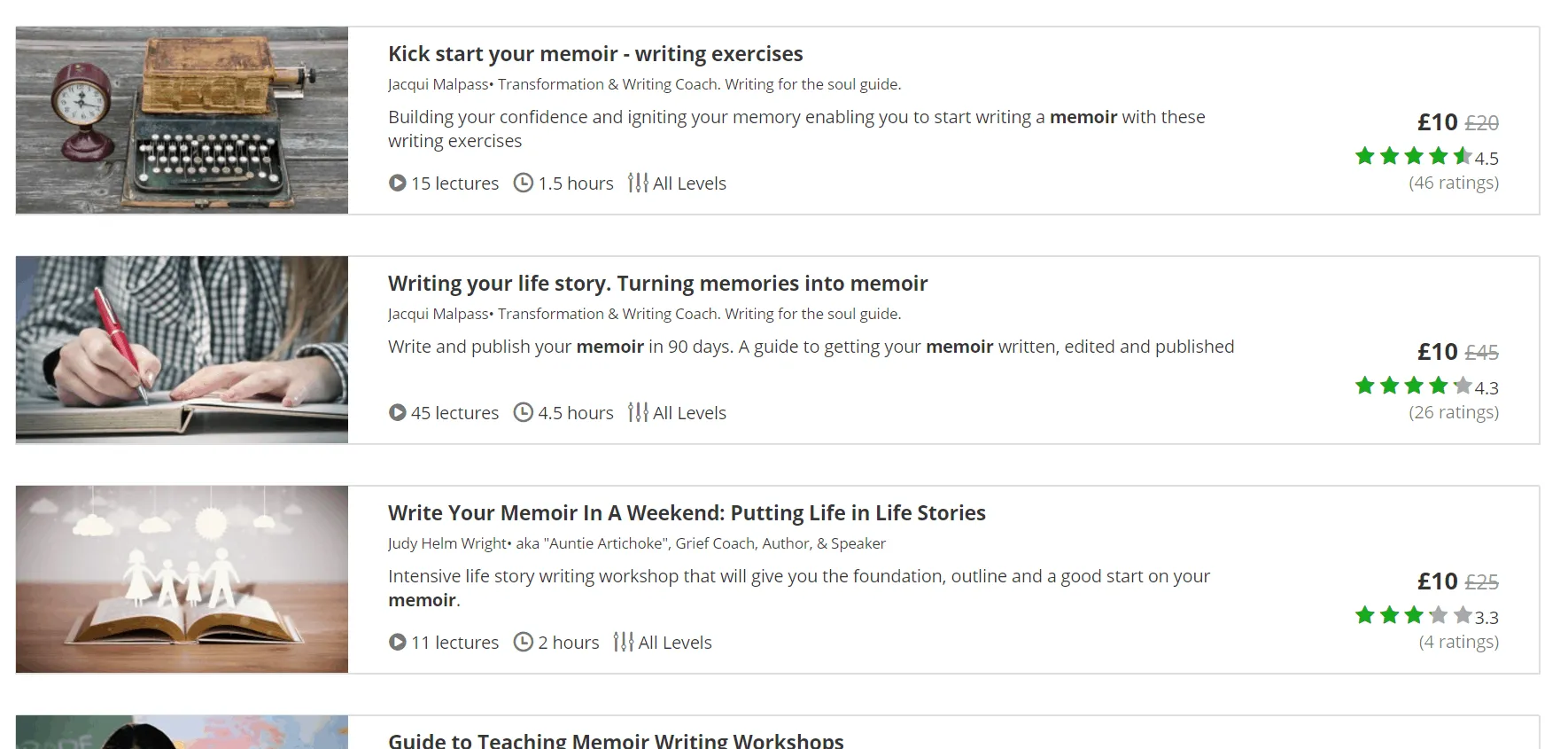
After finally having gathered your thoughts, getting into the creative flow of writing your memoirs can still be difficult. After all, writer’s block is not exclusive to professionals. Udemy is an online platform that offers a broad range of classes and courses for all kinds of topics. Just type in ‘memoir’ to find lots of courses to help you out.
5. Join The Memoir Writing Club

In 2012, the Memoir Writing Club (MWC) was founded by Irene Graham, based on the idea that everybody has a story to tell. The MWC is a resource for writing courses - compared to Udemy, there may be less choice, but it provides a specialised service focused on memoirs and autobiographies.
6. Write your autobiography mistake-free with Grammarly

‘Let’s eat grandpa’ or rather ‘Let’s eat, grandpa’? We can all agree that the comma makes a huge difference here. To make sure that your writing is mistake-free and unambiguous, the Grammarly app helps by checking your writing - in addition, it even suggests changes to make your sentences easier to read.
7. Scan your old photos with PhotoScan

PhotoScan is a scanner app from Google Photos. The app makes it easy for you to save and scan old printed photos glare-free by only using your phone’s camera. Another feature is that it automatically crops, rotates and enhances your scans.
Hopefully, these apps and sites will help to get you started on your biography, life story or memoir! If you haven't already checked them out, have a read of these 7 inspirational writing blogs before you start writing your story!

Why I Started a Company to Record Family Stories
We've identified the top three reasons to start writing your parents' life story, now. Plus: A free download to get started on your story.
Plus: An easy first step to get started (free download)
I loved my grandfather’s stories. The room filled with cigar smoke, I would listen to tale after tale as we played backgammon together. I loved to hear about his adventures with his football team or the time he met my grandmother.
This is the kind of history we feel most connected to - that of our own families. Their experiences. Their emotions. Their eyewitness accounts of the moments that shaped their lives.
Sadly, when my Grandfather passed away, I realized that the details of those old stories had faded. I had missed the chance to make a record of my grandfather’s life.
"I can still recall some of their experiences. But will I be able to do them justice when I tell snippets of them to my children and grandchildren one day?"
Today, this is a common problem. We have Facebook pages, old home movies, and photo albums. But these are often left scattered in boxes, on old computers, and discarded and broken phones - and they often don’t tell the important stories.
This is why, two years ago, I set up my company, Story Terrace. We help people to capture their Mom or Dad’s life story in a beautiful hardbound book by matching them with a professional writer.
People like Peter, for instance, who started a new life in the West as a dishwasher after the Russians invaded his hometown of Prague in Czechoslovakia. Or Sue, who gave up her job as a nurse to take care of her three children.
Sue, Peter, and hundreds of others have come to us at Story Terrace for help with writing their autobiographies – to tell their stories for generations to come. Not as some kind of vanity exercise, but to give their families a profound sense of where they come from. To show that every life has its ups and downs, its triumphs, and struggles.
I wish my grandparents had done the same as Peter and Sue. Their stories have faded faster than I could ever have imagined. I can still recall some of their experiences – experiences that have, after all, shaped my values and interests. But will I be able to do them justice when I tell snippets of them to my children and grandchildren one day?
So if you love your parents’ stories - if you want your children to remember their grandparents - then however you do it, capture them while you still can.
I am Rutger Bruining, Founder and CEO of Story Terrace, and I hope that together we can change the way that history is written.
Next steps: Two ways you can start capturing your parents' stories today
i) Download Our Free Guide
Subscribe and we'll send you our free guide, starting with 65 Memory Prompts you can ask your parents to get started.
ii) Work with a Story Terrace Writer
Story Terrace offers a complete service for capturing your parents' life story in a book, with packages starting from £1350.

Top 5 heartfelt gifts celebrities have given their parents
We've found the most meaningful gifts celebrities have given their parents. Plus: A free download to get started on their favourite gift yet.
Plus: the most meaningful gift you can give your loved ones (free download)
These celebrities know that they wouldn’t be where they are today without constant love, sacrifice, and support from their parents. They want to show their appreciation for their parents, just like the rest of us.
In a world dominated by superficial wealth, these famous faces honored their parents with meaningful gifts that demonstrate just how thankful they are.
And what makes these gifts even more appealing? You can give them, too.
"I know about being loving and caring, and sacrificing and showing up and being present in my children’s lives - I learned all of that from [my mother's] example.”
1. Leonardo DiCaprio's bountiful bouquet
If your Mom or Dad has a particularly green thumb, this might be an ideal gift. Oscar Winner Leonardo DiCaprio passed up the boring bouquet of flowers his mother might have expected to receive on a special occasion. Instead, Leo dedicated an entire grove of trees in southern California to his mother and grandmother.
For a more economically viable ‘thank you’ than an entire grove - you could plant a tree or sponsor an acre of rainforest to preserve in their honor.
2. Ryan Reynolds' unconventional calendar
Every year, the famous actor gets behind the lens - where he stages an entire photo album for his parents, recreating the main events of the year. Reynolds’ admits to USA Today that “it’s those personal gifts that really set my parents on fire.” Even for the rich and famous, ‘customized and thoughtful’ triumphs over ‘expensive and extravagant’, every time.
All you need is a camera to create this thoughtful gift. Or, why not try recreating old family photos from your childhood?
3. LeBron James' touching tribute
NBA champion LeBron James melted mothers' hearts the world over, by publishing a moving essay in his Mom’s honor. LeBron writes that “everything I’ve learned about being a parent to my boys ... everything I know about being loving and caring...I learned all of that from her example.”
A written tribute is a fantastic way to show your appreciation to your loved ones. Whether you publish your words like LeBron or keep them private, they will touch your parents in a way money can’t buy.
4. Justin Bieber’s empowering homage
Multi-platinum artist Justin Bieber released a song on Mother’s Day called “Turn to You”. The song was dedicated to his mother, with an empowering message about her struggles and bravery as a young parent. If this moving tribute wasn’t enough, all of the proceeds made from the track were dedicated to the Bethesda Centre that helped Bieber’s mother when she was pregnant with Justin.
If you aren’t quite as confident as Bieber, why not have your children perform a song - or write your parents a poem?
5. Britney Spears’ book of love (Our Pick!)
Pop sensation and mother of two, Britney Spears, paid the ultimate tribute to her mother by writing a biography about her - called ‘Heart-to-Heart’. The honest book captures her mother’s story as well as their unique mother-daughter bond.
Britney and her mother were able to better understand each other and their decisions, reflecting on life and bringing them closer as well as sharing new, untold stories. If like Britney, you want to show your appreciation for everything your parents have accomplished, why not honor them with a book about their lives?
Writing your Mum or Dad's life story is the ultimate gift. Here are two ways to do it:
i) Download Our Free Guide
Subscribe and we'll send you our free guide, starting with 65 Memory Prompts you can ask your parents to get started.
ii) Work with a Story Terrace Writer
Story Terrace offers a complete service for capturing your parents' life story in a book, with packages starting from £1350.

3 Powerful Reasons to Write Down Your Life Story in 2018
We've identified the top three reasons to start writing your life story, right now. Plus: A free download that's an easy first step to get started on your story
Plus: An easy first step to get started (free download)
Have you ever thought about writing down your life story? Perhaps you've started a journal or even thought about writing a memoir...
Today, more and more people are recording their memories. In fact, it’s become so popular, you can even hire a writer online to do the hard work for you.
So what's behind the trend? We spoke to dozens of amateur autobiographers - and we've identified the top three reasons to start writing your story, right now.
Plus - we have an easy first step to get started, including a free downloadable guide!
“I wanted to give my children and their families a greater understanding of the family that they came from”
1. There's no greater gift for your family
Barbara decided to record her life story after her mom died. She realized how little she knew about her own parents and grandparents. She told us, “I wanted to give my children and their families a greater understanding of the family that they came from.”
Family history is so much more than a family tree. When you write about your life, you can go beyond the names and dates. Your children and grandchildren can discover what life was like where you grew up and learn precious details about their extended family that may otherwise be lost.
The book can become an heirloom, full of beautiful anecdotes, which your family adds to down the generations. Dominic received the true story of his grandparents' love affair, immortalized in a book for his 40th birthday. He told us it was "the best gift I've ever received".
2. Find the meaning in your life story (so far!)
For Teresa, 71, “making this book has given me the time to reflect on what I chose to do with my life and the people who have helped me along the way.”
Documenting your life is a great way to appreciate the impact you’ve had in the world, reflect on your decisions, relationships, and accomplishments. Take stock of how far you have come, with a personal record of your life’s achievements in your own words.
Susan told us: “Writing my own book was a first-time experience. I am so proud of the book and the story! I have found structure to my life. Looking back has filled me with excitement for what’s still unwritten.”
3. Rediscover and reconnect
Reflecting on your life can bring back long-neglected memories and relationships. Janet, 70, said that writing her book “brought out all sorts of things that I had completely forgotten about.”
Revisiting your past may be the opportunity you need to rekindle childhood friendships and strengthen family bonds.
Two Ways to Start Your Story Today
i) Download Our Free Guide
Subscribe and we'll send you our free guide, starting with 65 Memory Prompts designed to jumpstart your life story.
ii) Work with a Story Terrace Writer
Story Terrace offers a complete service for capturing your life story in a book, with packages starting from £1350.

Reunited after 46 years
In her book 'Beauty for Ashes', Pat Wilson chronicles her remarkable quest to find her son. Christmas 1970 - Sean's dad picked him up to go and see Santa Claus. He didn't bring him back. Pat didn't see Sean again for forty six years.
Pat's Remarkable Journey
Pat was born and raised near Seattle. She married young and had a baby boy named Sean. Unfortunately, she found herself in an unhappy marriage and left just before Sean was a year old. That must have been tough—but it wasn't until December 1970 that Pat faced the challenge that would define the rest of her life.
In the days leading up to Christmas, Sean's dad picked him up to go and see Santa Claus. He didn't bring him back.
When they realized Sean was missing, Pat's family did everything they could to get him back. They hired private detectives and searched tirelessly, but they couldn't find him.
"You never get over something like that," Pat says. "You never forget... It was always in the back of my mind."
Pat didn't see Sean again until one fateful day forty-six years later, when she received an unusual message on Facebook.
Watch Pat's video to discover what happened next.
Pat's tale is truly remarkable—it gets right to the heart of why we started Story Terrace. But as Pat says herself, "everybody has an interesting story to tell." We truly believe that.
If you would like to learn more about what we can do for you and your family, subscribe to our newsletter or talk to a member of our team.

Press Release: StoryTerrace Launches Unsung Heroes of the pandemic campaign
Launched in May, StoryTerrace is running a national campaign to nominate your community’s unsung heroes of the pandemic.
Memoir-writing service StoryTerrace honors the unsung heroes of the COVID-19 pandemicShowcasing the incredible stories of the nation’s everyday heroes during lockdownWith just two weeks remaining in the 'Unsung Heroes' campaign, leading biography StoryTerrace encourages communities to highlight local acts of kindnessTo view all the Unsung Heroes submissions, visit the microsite: storyterrace.com/unsung-heroesIn the past two months, countless stories of everyday heroism and unselfish acts have not only lifted the spirits of the nation but kept communities going through some extraordinarily tough times. Unsung Heroes aims to bring to light the everyday acts of kindness that have characterized this lockdown, from saving lives to feeding a neighbor’s cat while communities recover.Over 400 nominations have revealed some truly inspiring stories from every facet of society; countless frontline workers, a professional chef feeding teachers and children at a local elementary school, and small business owners that have shifted production to masks and scrubs for medical workers.The national biography-writing service will be creating a book, compiling the nation’s everyday heroes and their unique stories of selflessness, and creating a website to showcase all those nominated at storyterrace.com/unsung-heroes.Of the submissions, 25 amazing Unsung Heroes will be gifted with the final book, within which, their stories will be captured as part of a national keepsake.The submissions will use an image of the nominee alongside a small paragraph of text explaining their story posted to social media, accompanied by the hashtag #UnsungHeroes and collated by StoryTerrace. The campaign allows anyone to nominate someone in their life who has gone above and beyond to help others– these could be nurses, doctors or even simply good samaritans.How it WorksAnyone can nominate a hero on StoryTerrace’s website: storyterrace.com/unsung-heroesAlternatively, entrants can post on their Instagram, Facebook, or Twitter by using the #UnsungHeroes hashtag and @StoryTerrace handle. The campaign is open for entries until June 30th, and StoryTerrace will announce the selected nominees before the end of July. All the entries can be found on the website.StoryTerrace's ‘Unsung Heroes’ campaign has helped motivate community members to share the stories of heroes of the COVID-19 crisis.Rutger Bruining, CEO and Founder of StoryTerrace comments:“As millions around the globe are currently stuck at home, many of us are feeling nostalgic and reminiscing – and at StoryTerrace, we believe that sharing stories can be one of the most therapeutic ways for us to connect in this difficult time. Through StoryTerrace, I have learned that above all, a sense of community is vital for our mental health and well-being—and preserving and reminiscing on our own life stories is so important to our happiness. Documenting memories and the emotions attached to them allow us to share and reminisce on our personal tales – and everyone has a story worth sharing.”About StoryTerraceStoryTerrace is a company which connects everyday people with professional ghost-writers, meaning that everyone can have their life story, or the life stories of their loved ones, documented in a professionally curated autobiography, biography or series of memoirs. They have a network of 600 professional writers worldwide, many of whom are critically acclaimed, and provide a range of packages to suit each individual life story. StoryTerrace's BookMaker platform - which includes a questionnaire - helps turn stories into booksStoryTerrace has previously made the first part of their service (a tailored questionnaire) available for anyone stuck at home who would like to get started on their life story for free. But having been overwhelmed by the acts of kindness and selflessness from around the country during this time, they have decided to pay tribute to these heroes through the ‘Unsung Heroes’ campaign.If you would like to hear more about our Unsung Heroes campaign, please don't hesitate to contact us: press@storyterrace.com
Press Release: StoryTerrace Appears on BBC Dragons' Den
Official press release for StoryTerrace's appearance on Dragons' Den, the UK version of television program Shark Tank.
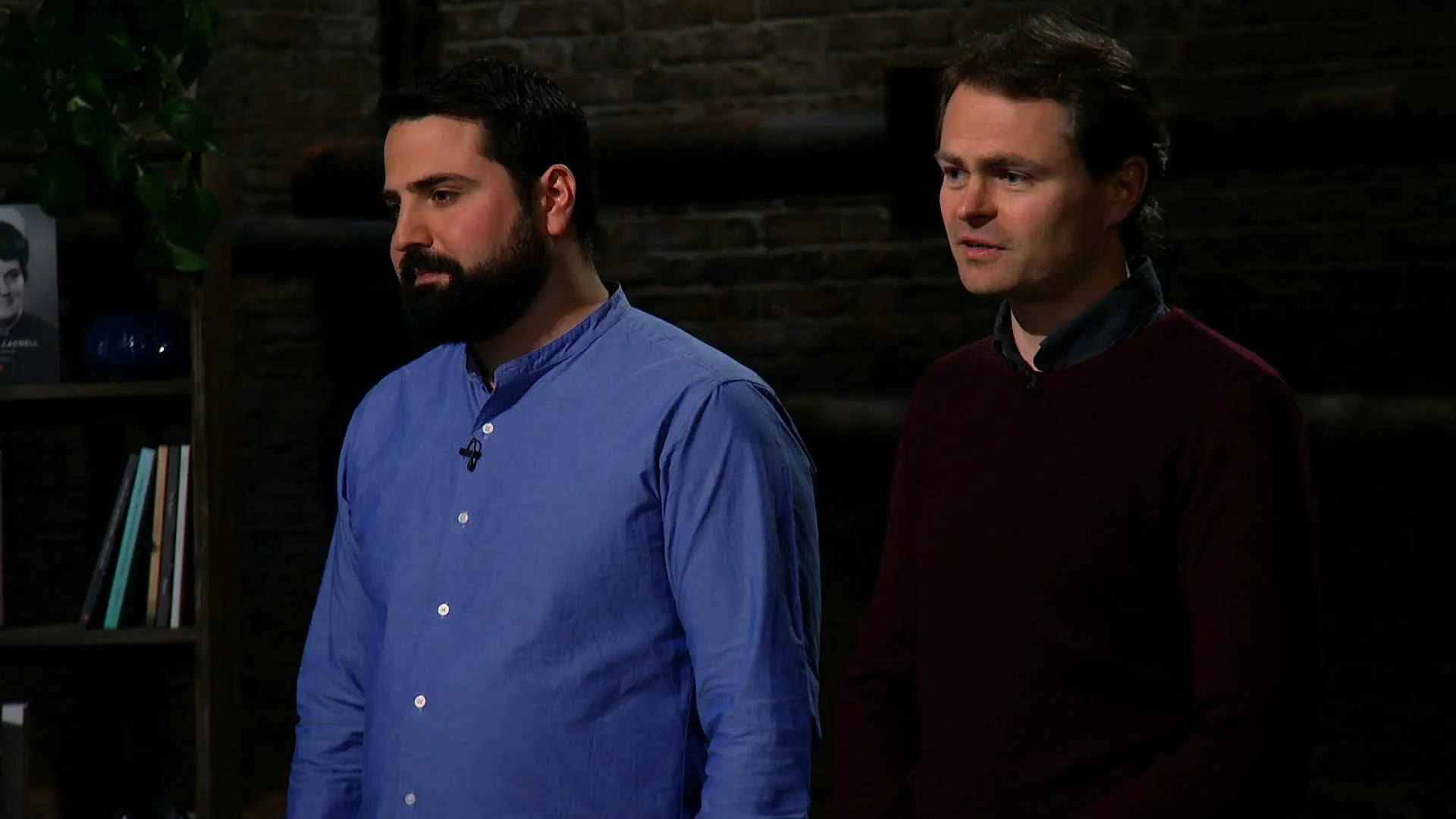
US-based memoir-writing service StoryTerrace dominates UK’s version of Shark Tank with two offers of investment- Scaling at speed across the US and UK by turning life stories into books- CEO Story: Founder Rutger Bruining left behind a career in private equity to help everyday people tell their life storiesThe world’s leading biography writing service, StoryTerrace, appeared on last night’s episode of Dragons’ Den – the UK’s version of Shark Tank. The unique service received an emotional response from the ‘Dragons’ and offers from investors Touker Suleyman and Tej Lalvani.StoryTerrace ultimately went their own way for investment – and in the time since filming the episode, went on to secure an impressive 15 times the investments that they were offered on the show.Founded in 2015 by Rutger Bruining, StoryTerrace has scaled rapidly, making significant inroads into the US and UK markets simultaneously with offices in Los Angeles and London. The company now boasts a stable of over 600 professional writers across the globe and has sold book projects worth over $5 million. Since recording Dragons’ Den, it has doubled its sales. Given StoryTerrace’s impressive growth thus far, CEO Rutger Bruining has demonstrated how to turn an artistic process into a scalable commercial proposition.Much in the same way that celebrities work with ghost-writers to curate their autobiographies, StoryTerrace’s service matches professional ghost-writers to everyday people, who are often gifted the opportunity to immortalize their life story by their children. Given that a third of people say that they’ve learned more about their parents’ lives from overhearing conversations, than from speaking to them directly, it’s not surprising that StoryTerrace has proven to be so popular.In a world of tech startups, StoryTerrace is a company with a very human storyIn a scale-up arena saturated with tech startups, StoryTerrace sets itself apart as one of the few companies with a truly emotive, human value proposition. With the rise of impact investing, more investors are now taking a keener interest in the emotive impact of the businesses they invest in – in StoryTerrace’s case, the preservation of family histories for future generations. While these motivations do not replace the focus on returns, StoryTerrace represents a unique combination of a high-growth scale-up and a business which puts genuine human experience at the centre of its proposition.Plans for scale2019 proved to be a wildly successful year for StoryTerrace. The past 12 months have seen the company double its sales and grow its in-house team to 20 people. By the end of the year, StoryTerrace plans on growing its current pool of writers to a thousand-strong international roster of biography and memoir-writing professionals, as well as making several new hires in Los Angeles and London to accommodate the rapid growth of the company.StoryTerrace’s unique service is inherently scalable, both as a result of the appealing service and their proprietary software. StoryTerrace records the specific requirements and desires of each client and matches them to the perfect writer for the project, ensuring a high level of customer satisfaction.StoryTerrace has also developed its own online portal, via which customers, writers, and editors can seamlessly interact, share creative ideas and media material, and collaborate on the content of the book until the hard-cover, full-colour copies are delivered to their homes.Rutger Bruining – CEO and Founder of StoryTerrace discusses his appearance on Dragons’ Den:“We are all hugely proud to appear, and be successful, on a platform as prestigious and well known as Dragons’ Den. The feedback from the investors demonstrates both the significant consumer value and interest in our proposition while the two offers from such well-respected business-people show the financial viability of the idea which as a founder is incredibly gratifying.After helping to record more life stories than ever before in 2019, we are really excited to see what the future holds. Our ambition is no less than to completely change how society captures and passes on stories. And that over the next 10 years it becomes the norm, not the exception, to have documented the life journeys of our grandparents and great-grandparents in their own words.”CEO story: Founder of StoryTerrace, Rutger BruiningAs the Founder and CEO of StoryTerrace, Rutger Bruining has a rather incredible story of his own. Born in the Netherlands, Rutger spent a lot of time with his grandfather, who was a member of the Dutch resistance in World War II. As a young boy, Rutger adored listening to tales of his grandfather’s experiences, but he passed away before Rutger was able to record any of his stories. The passing of Rutger’s grandfather proved a pivotal moment in his life which would come back to change the course of his career forever.Rutger went on to build an impressive academic and professional resume, earning a degree in Business Economics from the University of Amsterdam and an MBA at Columbia University with Honors, after which he became Investment Director at Arle Capital in London. Despite his budding career in private equity, he could not shake the regret of neglecting to record his grandfather’s life stories. In 2014, Rutger could not ignore it any longer and left behind his private equity career to create a platform for people to chronicle their life stories, and those of their loved ones.Rutger credits his grandfather’s memory and the regret of his stories being lost to history as the motivation to begin what is now the world’s leading biography writing service and finds catharsis in his work, helping thousands of people to immortalize their family’s greatest stories, forever.(Left to right) Theo Brainin and Rutger Bruining following their successful pitch on Dragons' DenIf you would like any further information on StoryTerrace or would like to speak with Founder and CEO Rutger Bruining, please don't hesitate to contact us: press@storyterrace.comGet in touch with us to find out how you can write your memoirs with our help and sign up for our newsletter for more exciting news and content.

How To Write Your Biography: 5 Approaches to Structure your Life Story
5 great ways to structure your life story for future generations of your family.
So you've gathered everything you need to write your life story - if you need some more help, download our Memory Prompt Cheat Sheet to uncover forgotten memories. But what comes next?
There are many ways to structure your life story. There is no right or wrong way to do it - but it’s one of the biggest choices you will make about your book. Structure is crucial to the readability of your book. You might write beautifully - but without any kind of structure, your words will be scattered and disorganized.
So how do you structure your life story? We’ve outlined five of the best approaches to help you choose.
1. The chronological approach
One of the simplest ways to structure your life story and develop a narrative is chronologically - in the order that it happened. In this case, you’ll start at the beginning of your timeline and work your way through from birth to present day. Writing chronologically facilitates fluid and realistic character development, and as a result, allows events to mirror the way your book will be read.
A surprising example of a chronological structure: Time’s Arrow by Martin Amis
Shortlisted for the Booker Prize in 1991, Martin Amis’ book is written in reverse chronological order. It follows the story of a doctor getting younger and younger as time passes in reverse. This disorienting narrative makes for an unsettling and irrational read and emphasizes the importance of deliberate structure within a book.
2. The Basic Three Act structure
The Basic Three Act structure splits the narrative into, unsurprisingly, three parts: the setup, confrontation and resolution. It is one of the easiest ways to structure your life story.
The setup introduces the characters, their relationships and the environment they live in. It also presents a strong hook - an exciting incident that provokes a change in the protagonist's routine.
The second act - the confrontation - makes up the main bulk of your story. The stakes are raised throughout the act, until a major twist, usually a moment of crisis, initiates the start of act three - the resolution.
The resolution presents the final showdown and draws together and explains all the different strands of the plot.
If your timeline can be split into three clear sections along the lines of these themes, then this could be the structure for you. Often, a ‘Three Act’ book will be written chronologically - but it doesn’t have to be...

The setup introduces Rose, an unhappy woman engaged to a man she detests. Jack rescues her, following her attempt to commit suicide. The confrontation sees the stakes raised when Rose’s fiance begins to suspect their affair. In a moment of crisis, the famously unsinkable ship hits an iceberg. The resolution follows Rose and Jack as they try to escape the sinking Titanic, ultimately ending in Jack’s death and Rose’s survival. Rose recounts the series of events as an old woman as the story ends.
3. Freytag’s Pyramid
Freytag’s Pyramid is a more complex version of the Basic Three Act structure, with five parts rather than three. These are: exposition, rising action, climax, falling action and resolution.
The exposition, similarly to the Basic Three Acts’ setup, introduces the characters and backdrop of the story.
The rising action follows the series of events that occur straight after the exposition and leads up to the climax.
The climax is the turning point that changes the protagonist’s fate.
The falling action is the consequence of the climax, where the conflict between protagonist and antagonist unravels in a final moment of suspense.
The resolution is the same as in the Basic Three Acts, creating a sense of catharsis in conclusion to the story.

A great example of Freytag’s Pyramid: Little Red Riding Hood by Charles Perrault
The exposition introduces Little Red Riding Hood as she takes a basket of food to her grandmother’s house. Before she gets there, the wolf eats and takes on the identity of her grandmother. This is the rising action. The wolf convinces Little Red that he is her grandmother, and eats her in the climax. In the falling action, the wolf falls asleep. The huntsman finds the wolf and cuts open his stomach. The resolution sees Little Red and her grandmother freed, and the wolf killed.
4. In Media Res
Latin for ‘into the middle of things’, it’s unsurprising that this structure starts your book right in the middle of the story. This is usually in the midst of a crisis, or at a crucial point of action. This structure gives the reader a sense of what’s to come before reverting to the beginning of the story to find out how they got there. It’s also a great way to hook the reader from the first page.
If there’s a specific event in your life that was a turning point, shaping who you are today, this might be an interesting place for you to start.

The famous poem opens in media res, with most of Odysseus’ journey already traveled. Flashbacks and storytelling describe the events and characters met along the way.
5. The Hero’s Journey
One of the most popular methods used to structure your life story is the Hero's Journey. It was first conceptualized by Joseph Campbell in his book, The Hero With A Thousand Faces, and has since been adapted by Hollywood executive, Christopher Vogler. There are 12 stages to the Hero's Journey.
The ordinary world introduces the hero, closely followed by the call to adventure - a challenge or problem. The hero, probably scared of dangers ahead, is reluctant to accept the adventure in the refusal of the call. Meeting a mentor gives the hero confidence to cross the threshold, committing wholeheartedly to the adventure of the special world.
The hero faces tests, allies and enemies as they draw closer to the “elixir” in the approach to the innermost cave. The ordeal sees the hero pushed to their limits in pursuit of reward, before the road back. Consequently, in the resurrection, the now-changed hero returns with the elixir, commonly knowledge, back to the ordinary world.
.webp)
In the ordinary world, Luke Skywalker lives on moisture farm on Tatooine. R2:D2 gives Luke a message from Princess Leia, asking Obi-Wan Kenobi to help her as the call to adventure. Obi-Wan gives Luke his father's lightsaber, but at first, Luke is reluctant to accept his offer in the refusal to call. In addition, Obi-Wan, the mentor, offers to train Luke to become a Jedi (this actually happens before the refusal to call in Star Wars). Crossing the first threshold, Luke finally agrees to go with Obi-Wan to Alderaan to deliver the plans for the Death Star to Leia's father.
Han Solo and Chewbacca, their allies, agree to take Luke and Obi-Wan to Alderaan. In the approach to the innermost cave, the Death Star destroys Alderaan. They invade the Death Star and rescue Princess Leia, but Darth Vader kills Obi-Wan Kenobi in the ordeal. The reward sees Luke join the Rebels to destroy the Death Star, who also refuses Han Solo's offer to leave. Luke chooses to help overcome the Galactic Empire in the road back.
Luke remembers Obi-Wan's advice and destroys the Death Star using the Force in the resurrection, and wins a medal, finally taking his first steps towards becoming a Jedi in the return with the elixir.
At the end of the day, your story can be as structurally unpredictable as life itself. It’s your life and your story. We hope these methods have opened your minds to the vast possibilities and different forms your life story can take. But remember, there’s no right or wrong way to structure your life story: it’s up to you.
How To Digitize Your Photos
Your book needs some images to break up the writing. But how will you digitize your photos from those old albums? Find out how to get the best results here.
This is the sixth part of our 'Ultimate Guide to Writing a Memoir.'
To access the rest of the guide, click here.
Want to break up your writing and add an element of visual context with old photographs? Here’s where you’ll learn how to successfully scan your images onto your computer in a quality you’ll be happy to include in your book.
There are a few different ways you can digitize your photos, each with their own set of pros and cons.
1. Don't just use your smartphone camera
The quickest and easiest method of digitizing photos is to snap your prints using your smartphone. This may be efficient, but results will be mediocre at best. Most smartphones use flash, and most photographs are glossy. This doesn’t make for a perfect match, and your images will capture the glare of the flash, or – even worse – your reflection. Even if you can work around this problem, your images will not be properly cropped, may be distorted, and are likely to be low-resolution and poor quality.

2. Use a dedicated scanning app
You can do slightly better with your smartphone, if you use an app dedicated to scanning prints. One app that stands out from the rest is Google’s free PhotoScan app. All you need to do is position your smartphone over the photograph, and the app does the rest.
You’ll see four dots appear on the image, which will inform where you position the camera for the scan. With almost as little effort as using your smartphone’s camera, this app eliminates glare and automatically crops your image to the borders of the photograph.
Each scan takes roughly 10 seconds. However, the quality still leaves a lot to be desired, when compared to a purpose-built scanner.
3. Use a scanner
If you have your own scanner, or you can source one from a friend or family member – great! Simply put the photographs you want to digitize through the scanner (depending on whether you’re using an auto feed or flatbed scanner) and wait while the images are processed. Using a scanner can be time-consuming and fiddly. Make sure there’s no dust on your photographs or the scanner bed – you don’t want that in your book!
If you want to reproduce your photographs at the same size as the original prints, you’ll need to scan at a minimum of 300 dpi. Your photos will need to be scanned at 600 dpi to print double the size, and so on. 600 dpi is recommended, otherwise the photos are going to look pixelated and blurry. No matter how high quality the scan, if the image itself is blurry or lacking in detail, you may still be disappointed by the results. It’s also a good idea to caption your images, so readers know who is in them, and when and where they were taken.
4. Get professional help (recommended)!
If you’re pressed for time and short on patience, or if none of the alternatives are an option, there are several companies that provide photo scanning services. All you need to do is send your photos, and they’ll do the work for you – for a fee, of course!
Read Chapter 7: Designing and Printing Your Book
Now Is The Time To Share Your Story
StoryTerrace is your book production partner, including all ancillary activities from high-quality professional writing and editing to design, printing and publishing.


