Discover The Stories StoryTerrace Help Share.
Explore inspiring stories, expert tips, and the latest trends in personal biography creation on our blog.

How to Write a Book About Your Life: A Guide That Works
Seven honest steps from a team that's helped thousands of people write their life stories. What works, where people stall, and when to get help.
What Is a Ghostwriter? Meaning, Definition & How It Works
A ghostwriter writes books and memoirs credited to someone else — including most celebrity autobiographies. The full meaning, and how it really works.
How Much Does a Ghostwriter Cost in 2026? Real Prices
How much does a ghostwriter cost? From £999/$1,200 for a short book to £60K+ for a premium memoir — real 2026 prices, not vague ranges.
How Long Does It Take to Write a Book? Real Timelines
How long does it take to write a book? Real timelines: 6–12 months solo, 6–9 months idea-to-print with a ghostwriter. Stage-by-stage breakdown inside.
Memoir vs Autobiography: 5 Key Differences (With Examples)
Memoir vs autobiography explained in plain English: 5 key differences, a comparison table and famous examples so you know which one to write.
.webp)
Browse all articles

Amazing Full-Colour Photos From the Past
Artists across the internet are using technology to add color to old photographs. Check out our 10 favorite photos for a more intimate look at the past.
The Evolution of Photography and Colorization
The earliest surviving photograph dates from 1826, and since then, photography has immeasurably changed our relationship to the past. Instead of just imagining what people looked like and how they dressed, photos made it possible to see things as they really were.
It took until 1935 for color film to take off; before that, viewers had to apply their imaginations to sepia- or gray-toned pictures. But if you’ve ever tried to do this, you know how hard it actually is to mentally project color onto a black-and-white photo. When you look at them, you tend to think the world back then was a dull, colorless place.

Peter Jackson meticulously colorised film footage from World War I in his latest documentary
That’s why the new trend of colorizing old photos is so arresting. It forces you to look at the past with new eyes — and the results are pretty amazing, thanks to obsessive digital artists taking hours to painstakingly "paint" old pictures in Photoshop.
Perhaps the best example of this work is Peter Jackson’s documentary "They Shall Not Grow Old," in which his team color-corrected and standardized hours of authentic film footage of World War I to stunning effect.
It’s not just professional filmmakers who are touching up the past. Artists and history buffs across the internet are getting into the act, too. Here are some of our favorite full-color historical photos.
The Genius

This photo showcasing Albert Einstein’s sense of humor is already quite famous, but seeing the genius in full color reminds us that he was a real person — not just an impossibly brilliant scientist. We bet he was a blast to hang out with!
The Rubberneckers


This photo of a car accident in Washington, D.C - before and after colorization - shows that some things never change. Even when cars were still new, taking your eyes off the road could lead to a disaster — and plenty of people would stop what they were doing to have a look.
The Showman


Big Jay McNeeley played a mean saxophone, and you can almost hear the crowd going wild in this photo. The color heightens the drama in a way that makes you feel like you could step right into this 1953 L.A. concert venue.
The Dust Bowl


Dorothea Lange’s famous photos of the Great Depression and the Dust Bowl of the American Plains helped highlight the suffering of the era on a human level. Seeing her work brought to life in full color reminds us that these events happened to real people, in very real places.
The Starlet


So much of how people think of the Golden Age of Hollywood relies on black-and-white movies and stills. That’s why it’s such a refreshing change to see an icon in her full humanity. This photo of Marilyn Monroe captures her vulnerability as well as her star power.
The Inventor


The Immigrant
Photographers carefully documented the waves of immigrants coming to the United States through Ellis Island. Seeing these photos in color show the remarkable variety of clothing and cultures that made up the New York City melting pot of the early twentieth century.
The Train

It’s easy to forget that trains were once an integral means of transportation. This photo of a steam engine chugging through downtown Syracuse, New York in 1905 is a vivid reminder of the pre-automobile era.
The Dancers


Most photographs of women from the early twentieth century are carefully composed, formal affairs, with hardly a smile in sight. That’s why we love this relaxed group of dancers from the National American Ballet as they simply sit and enjoy each other’s company.
The Mechanic

What can we say about this? The attention to detail in the colorization is astonishing, with every glint of metal and hair on the worker’s arm working together to create a fully realistic color photograph. If this is the future of colorizing, we’re all in!
Preserving Your Own Photos
If these beautiful photographs have inspired you to take a closer look at your own family photos, MyHeritage offers an app that automatically colorizes your personal photos to breathe new life into your family history. The results are sure to amaze!
Whether you colorize your treasured photos or enjoy them the way they are, preserving a pictorial record of your ancestors is important for everyone. StoryTerrace allows you to add pages of vintage snapshots and portraits to your memoirs to bring your personal autobiography to life.
To find out more about how to write your own autobiography, get in touch to schedule a free consultation, or sign up for our newsletter for more inspiring articles about ways to preserve the past for future generations.

4 Meaningful Gifts to Give on Grandparents Day
This Grandparents Day, give the gift of memory. Let StoryTerrace write and publish a beautiful biography that can be shared for generations.
The Bond Between Grandparents and Grandchildren: Gifts to Strengthen Connection
The bond between a grandparent and their grandchild is the stuff of legend... and a few Hallmark films. But did you know that it can also promote greater emotional health? It's true — and there's scientific research to support that. In fact, studies have shown that close ties with a grandparent can also reduce depression and encourages pro-social behavior for grandchildren— a benefit that lasts into adulthood.
But grandparents enjoy plenty of benefits, too. They are less likely to be depressed when they have close relationships with their grandchildren. Serving as a caregiver for grandchildren can also help keep grandparents mentally sharp and stave off cognitive decline.

Valerie & David after discovering they'd been gifted a StoryTerrace biography package!
The 4th October is National Grandparents Day, and it's the perfect opportunity to let grandma and grandad know just how much they're valued. With that in mind, we've put together a list of thoughtful gifts for grandparents that can help reinforce that important connection — even in a time crunch! These gift ideas are designed to help strengthen the important bonds between grandparents and their grandchildren — and that's a gift with a lifetime of benefits.
1. Reverse Story Time
Most grandparents are more than happy to snuggle up on the couch with their grandkids and read as many stories as they like. But you can flip the script by having your child present grandparents with a homemade gift certificate for story time. When Grandma is ready to cash in, she can choose a storybook and listen as her favorite young reader practices aloud. This gift of time is a great way to get emerging or reluctant readers to build comprehension, and it keeps grandparents up-to-speed on kids' educational progress.
This idea can still work for very young children, who can be encouraged to tell their own version of the story based on the pictures. Older kids and teens can make an ongoing date to share everything from an interesting magazine article to the whole Harry Potter series.
2. Skype Tutorials and a Call Schedule
Not all families live close enough for regular visits, but it's definitely worth going the extra mile to foster connections with distant grandparents. Today's kids and teens are remarkably tech-savvy, so harness that ability by having them teach their grandparents to Skype (or FaceTime, or Snapchat). This puts your kids in the driver's seat by letting them show off their expertise. They'll be motivated to keep up the calls when they know their grandparents are relying on them for help learning the ropes.
For grandparents who live far away, Skype chats can be a game-changer. They allow a doting grandpa to keep up with all the little changes that happen so quickly as a toddler grows into an inquisitive kid and a creative teen. This is also a meaningful gift for grandparents from adult grandchildren, as it's never too late to strengthen those bonds.
3. Shared Projects
Looking for a great way to foster conversation between kids and their grandparents? Keep them busy in a side-by-side activity, and the conversation will come. Crocheting, cooking, woodworking — these are all useful skills that grandparents can pass on. Consider making a joint gift basket of supplies to give to grandparents and grandchildren; then watch them come together to get creative.
Teaching can go both ways, too. Kids also enjoy getting to teach their grandparents new things, whether it's how to edit a video for YouTube or techniques for winning their favorite online games. Check with older kids and teens to see what other experiences they'd like to share — you might be surprised at their ingenuity!
4. The Opportunity to Share Their Life Story

95-year-old Jouw Nauta was delighted to receive his life story, delivered in a beautiful gift box
Grandparents are the gatekeepers to a family's history. They're a rich source of information on the past, and the act of sharing that information can also help strengthen bonds. In fact, sharing tales from the past is a crucial part of helping younger generations build memories, but it's easy to get so caught up in daily living that the opportunity to tell these stories is lost. StoryTerrace solves this dilemma by pairing grandparents with a professional author who writes their life stories, complete with all of their favorite family photos. The result is a published book, that serves as a beautiful keepsake to share with the whole family — including grandchildren.
Letting a professional writer take on the task of writing the autobiography frees grandparents to focus on their most important memories instead of focusing on grammar and sentence structure. The process of storytelling is an incredible gift in itself, and the resulting book is something grandchildren can turn to for advice and heartwarming memories.
To learn more about how StoryTerrace can help you celebrate the life and legacy of your grandparents, sign up for our newsletter — we've got lots of ideas!
You can also schedule a free consultation with our team to discuss ideas for your grandparents' biography when you're ready to get started on the best gift they'll ever receive.

How to Preserve Your Life Story Digitally
Diaries and photo albums are among our most valuable possessions. Keeping them online, or creating a digital backup, can help keep them safe. Here's how.
How to Digitise and Preserve Your Precious Memories
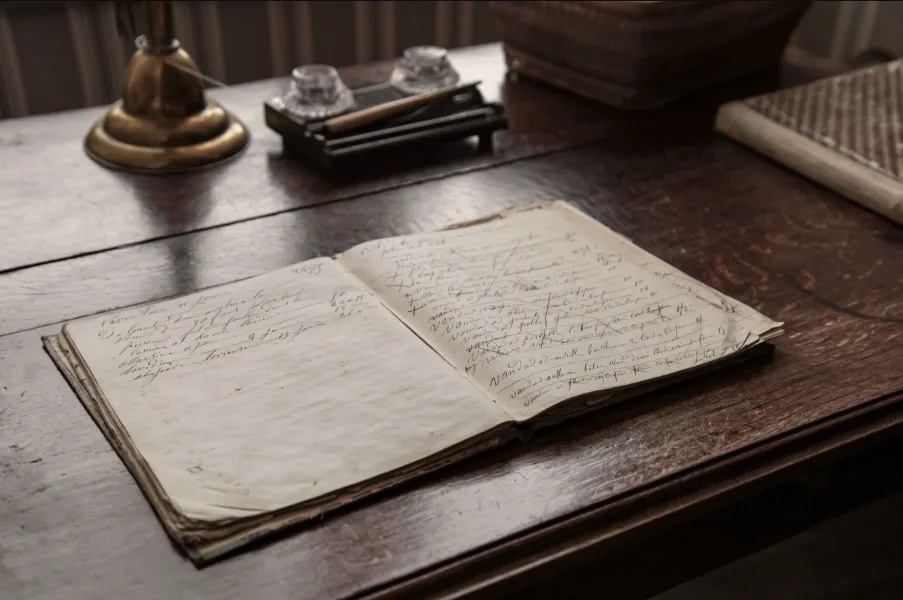
Keeping a diary can be hugely rewarding. Daily journaling has been shown to improve sleep, memory, and concentration while reducing stress. On top of all that, a diary keeps your memories organized and allows you to easily look back on treasured moments you might otherwise forget.
However, there are a few problems with a shelf full of journals. Paper diaries take up a lot of space, they aren’t easy to transport, and they can easily be lost or damaged. Plus, finding a specific memory can be time-consuming.
These problems become even bigger when you factor in photo albums, home movies, and boxes of souvenirs. Fortunately, modern technology can make this task a whole lot easier. Here’s how.
Preserving Your Diaries
Diaries are vital sources of knowledge. Historians have learned a huge amount from studying the diaries and journals of people from bygone ages, and some of the world's most precious historical texts started out as personal diaries.
Of course, few paper diaries will survive for thousands of years. Most will start to fall apart after just a few dozen. That’s why museums and libraries put so much time and energy into digitizing their collections — and why it’s a good idea for you to keep a digital diary, too.
A digital diary can be easily backed up, making your memories almost indestructible. A quick text search of your digital journal will take you directly to the memory you want to find.
To keep a digital diary, a text document is perfect — especially if you use a service like Dropbox or Box to automatically back it up. You can also back up your existing paper diaries using these services.
Preserving Your Photographs
Looking through old photo albums with friends or family is a wonderful way to reminisce, and digital photo collections don’t replace that tactile social experience. However, keeping your photos in the cloud keeps them safe and allows you to share them with family all over the world.
The biggest advantage to digital photographs is that they don’t age. A good, high-resolution image stored in the cloud will look great a hundred years from now, while a printed photograph might have become discolored or damaged.
Digitizing printed photographs means scanning them, which can be a painstaking task. Doing just a few at a time helps make the process more manageable, or you can turn to a professional service to do all the technical work for you.
Here is a video to help you get started with preserving your photographs:
Once your photographs are digitized, you can back them up just as you would your diary by storing them on a memory stick or in the cloud. Just like that, your memories are protected and preserved for decades to come.
Audio and Video
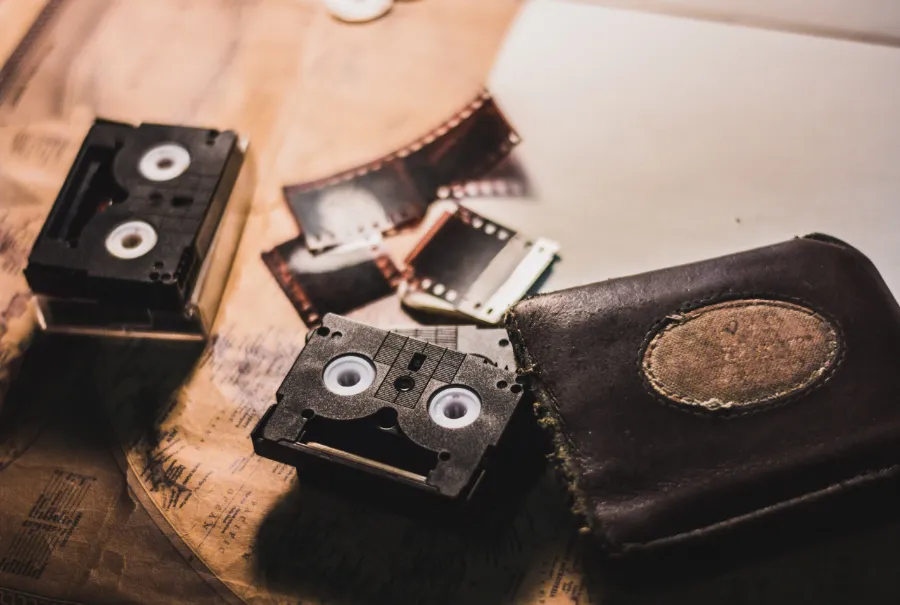
While text is usually easy to preserve, audio and video are a bit trickier because digital formats for these media are always changing. Old formats get more and more difficult to access as time goes by.
There’s no need to panic if your most precious memories are stored on video cassettes. It’s still possible to transfer media from one format to another. There are special services that focus on doing this (EachMoment is a good choice), and in some cases, the converted footage will even be cleaner than the original.
Preserving Your Messages
Among the most fragile types of memory are digital messages. These have become more difficult to preserve as technology advances. Apps like WhatsApp allow you to back up and download your messages, and many popular email clients like Google Mail do the same.
Being able to check back through old messages might be just what is needed when it comes to filling in a gap in your memoirs, so taking the time to preserve them is worthwhile.
In Conclusion
Your memories are precious. They bring you happiness, keep you healthy, and tell you who you are and how you’ve been shaped by your past. But they can’t do any of these things if they’re lost or inaccessible. That’s why it’s a great idea to digitize your memories — whether they’re old home movies, precious photographs, or a collection of diaries and letters. Keep them safe, and they’ll bring you joy for many years to come.
Having a digital archive makes writing your memoirs a breeze – especially if you let StoryTerrace do the heavy lifting for you.
We’ll take your memories, photographs, and anecdotes, and turn them into a beautiful bound book. Sound good? Get in touch to schedule a quick chat, or sign up for our newsletter for more information.

Interview With a Writer: Alan Goforth
Alan Goforth is a Premium StoryTerrace writer with decades of experience as a journalist and freelance writer. Learn more about his passion for business and sports writing in this month’s featured writer interview.
Premium Writer
Alan Goforth
Alan Goforth earned a master’s degree from the Missouri School of Journalism and started his career as a copy editor at a metropolitan daily newspaper. As the internet changed the news industry, Alan transitioned into freelancing and has built a successful career as a ghostwriter. He has written several biographies and works with both corporate and individual clients to tell their stories.
Alan currently resides just outside of Kansas City in Missouri. When not writing, he enjoys reading nineteenth-century Russian literature with a cup of coffee in hand.

ST: When did you first realize you wanted to be a writer?
I grew up as a voracious reader, especially The Hardy Boys and other mystery series. I enjoyed writing about arts and entertainment for my college newspaper and after working at a public television station, I earned a master’s degree in journalism. Early on, I realized my skills lie in journalistic writing, not fiction, although like every other journalist, I am working on a screenplay.
"Everyone has a story that is of interest to someone else"
ST: Whose biography would you most like to write?
I recently read a biography of Ronald Reagan, who had a multifaceted life from Hollywood to Washington. It would be interesting to write about the unlikely partnership among him, Margaret Thatcher, Pope John Paul, and Mikhail Gorbachev that ultimately ended the Cold War.
ST: Why do you enjoy writing for StoryTerrace?
I have been fortunate enough to write several books about successful retired business people. Meeting interesting people has given me several ideas that have helped me in my own business.
ST: If you were writing a StoryTerrace book of your life, what would be the title and why?
And Then the Phone Rang. Every time I thought I had my career path figured out, it seemed the phone rang and things changed. I planned to be a newspaper journalist, not an author, but here I am.
ST: What surprised you most about working for StoryTerrace?
It has confirmed something I have long believed: Everyone has a story that is of interest to someone else. Thanks to StoryTerrace, they have a way to tell it. Most people know what they want to say but simply need someone to help them say it.
ST: What is the most memorable story you've told as a writer?
I wrote The Nigerian Nightmare, the biography of Christian Okoye, who grew up in Nigeria, came to the United States on an athletics scholarship, started playing American football at age 24, and became an All-Pro running back in the NFL.
ST: What is your biggest fear?
A good friend who died of ALS two years ago always said, “I don’t fear failure. I fear succeeding at something that doesn’t matter.” I agree.
ST: What's something that people would be surprised to learn about you?
Although I am not much of an athlete, I did run the City of Los Angeles Marathon when I turned 40. My finishing time was exactly twice that of the winner — but I did finish.
ST: What trait do you admire most in others?
Loyalty.
ST: Who are your favorite writers?
I will mention two fellow Missourians, Mark Twain and Ernest Hemingway. I like to say that Hemingway and I both worked for the Kansas City Star, although he was there for only a few months at the beginning of his career and I freelanced for them.
ST: What fictional character do you most identify with?
Samwise Gamgee in The Lord of the Rings. He made his share of mistakes but always had good intentions.
ST: What is your motto?
“Some facts are just too good to check.”

Lightning Round!
ST: Dogs or cats?
Dogs.
ST: Salty or sweet?
Salty.
ST: Introvert or extrovert?
Ambivert — a combination of both at different times.
ST: Truth or dare?
Dare.
ST: City or country?
Suburbs.
If Alan's unique take on storytelling has inspired you to get to work on your own biography, get in touch to schedule a free consultation. You can also use our Writer Search Tool to find the perfect writer for your project today.

Meet Mary McMillan: The Mother of Physical Therapy
Mary McMillan single-handedly changed the course of physical therapy when she used her techniques to care for wounded soldiers during World War I.
Unsung Hero: Mary McMillan
Nearly everyone knows the story of Florence Nightingale, the intrepid nurse who revolutionized sanitation during the Crimean War and changed the way hospitals were run forever. Her work transformed the medical world and saved thousands of lives.
But have you ever heard of Mary McMillan? She, too, was a trail-blazing wartime nurse who had an enormous impact on the medical field. Mary took it upon herself to get a full education at a time when it was unusual for a woman to do so. She trained in Europe to learn the very latest techniques of massage and physical therapy, then brought her knowledge back to the United States to treat children with polio. During World War I, Mary was appointed the first-ever Reconstruction Aide of the US Army Medical Corps. In this role, she used modern physical therapy techniques to rehabilitate wounded soldiers. It was a seismic shift in care that changed the way we all recover from surgery or injuries today.
Because Mary was a woman, her contributions slipped under the radar of history — until now. Thanks to Mary Farrell, a descendant of Mary McMillan, her story has finally been told.

The cover of Mary Farrell and Marta M. Mobley's StoryTerrace book
Mary Farrell had always been fascinated with "Aunt Molly," the family’s nickname for Mary McMillan. She inherited her great aunt’s extensive diaries and papers but was just never able to put all the information together to tell this remarkable story.
Enter StoryTerrace. When Mary retired, she knew she finally had time to devote to the project, and she contacted StoryTerrace for some professional help to make it happen. Mary knew she needed a special writer, someone who was just as passionate about Aunt Molly’s work and who wasn’t afraid of some extra research to flesh it out.
Mary chose Marta M. Mobley, one of our Critically Acclaimed writers. Mary was impressed by Marta’s experience as a story editor and producer on film and television projects and knew she would be the perfect fit. For her part, Marta knew that this story was something truly special.
A true partnership between client and writer was born. Mary and Marta were in constant communication during the entire process, often emailing and calling each other to celebrate successes in digging up a long-lost document or photo. The book ended up being a total collaboration, and both are credited as co-authors on the final publication.
A Life on Both Sides of the Ocean

Mary McMillan in her early twenties
Mary McMillan was born in Boston in 1880, just a few years after her parents emigrated from Scotland. When she was five years old, her mother died of consumption, weakened from the grueling delivery of Mary’s younger sister and heartbroken by the baby’s untimely death. After her mother’s funeral, her father remarried, and Mary was sent to England to live with her aunt. Mary was educated overseas, finding her passion in the study of what was then called "gymnastics" — the science of how movement affected the body and its health. Mary lived in Liverpool until 1917 when she returned to the United States to begin her incredible career.
Much-Needed Expertise

Throughout the early twentieth century, polio was a disease that crippled thousands, including children
When Mary returned to the United States in 1917, no one outside of New York City was practicing anything even remotely like what she had been trained to do in Europe. Mary had specialized in physical deformities and understood the principles of therapeutic massage. She began using her skills to help polio patients, many of whom struggled with varying degrees of paralysis from the disease.
In the Army Now

Mary was the first Reconstruction Aide of the United States Army Medical Corps
In early 1918, Mary was sworn into the US Army as the first "Reconstruction Aide." At the time, this was the term for a physical therapist, and Mary was the first one recognized as such in the United States. She took her considerable expertise and experience directly to Walter Reed Hospital, where she taught other nurses the skills they needed to help wounded soldiers recover during World War I.
Nursing the Wounded


WWI soldiers recovering from wounds and undergoing rehabilitation at Walter Reed Hospital in Washington, DC
Mary designed the army hospital’s physical therapy protocols from scratch during her time at Walter Reed. She had to overcome a good deal of skepticism about the value of massage and worked hard to sell her ideas. She even had a special prescription pad made to include her therapeutic recommendations because it was the only way she could make sure soldiers got the care they needed.
Sharing the Power of Physical Therapy

Mary teaching aspiring physical therapists at Reed College in Portland, OR
After the war, Mary wrote a book describing the treatments she pioneered. Massage and Therapeutic Exercise was published in 1920 and was met with surprising success. The world was hungry for physical therapy, and Mary later taught the first course on the subject at Reed College.
A lifelong learner, inspiring teacher, and impassioned caregiver, Mary went on to refine physical therapy throughout her long life. A woman of means, she gave half of her fortune to the Foundation for Physical Therapy Research, which offers a scholarship in her honor.
You can learn more about the remarkable life of Mary McMillan by reading her story in full. Mary McMillan: The Mother of Physical Therapy, by Mary Farrell and Marta M. Mobley, is available on Amazon as an ebook or paperback. It’s a remarkable tribute to an even more remarkable woman.

Do you have an ancestor with an amazing story? Get in touch to work with one of StoryTerrace’s professional writers to share it with the world. We also have add-on packages to make self-publishing easier than ever.

The Role of Mom and Dad: Our Research
Our latest research reveals how people in the U.S. relate to their parents. The results paint an enlightening picture of the role of Mom and Dad in our lives.
How Do You Relate to Your Parents?
How do you relate to your parents? Do you regularly check in with the people who brought you into this world? Do you know what kind of lives they led before you were born?
These are all burning questions that we really wanted to understand, so we decided to do some research into how people relate to and understand their parents.
The Wall Street Journal covered our findings about how people really feel about — and how much they actually know about — their parents. What really stands out is that many people are not fully connected with their parents, with 25% of U.S. respondents admitting that they haven't spoken to their parents in the last month.
Keeping in Touch
When was the last time you caught up with your parents and checked in to see how they were doing? Our research found that 30% of those living in the western part of the country haven't spoken to their parents in the last month, compared to those living in the Midwest — 83% of them have spoken to their parents in the past month.
Mom and Dad: Before You Were Born

Our research also shows that many people in the U.S. are somewhat in the dark about what their parents' lives were like before they had kids. When it comes to piecing together the personal histories of their parents, 45% of people report that they’ve learned more about their parents’ lives from discovering family possessions, overhearing conversations, or speaking with other family members, rather than directly from their parents themselves.
On top of this, 35% of those surveyed said they really admire their parents' achievements but have little understanding as to how they accomplished what they did. Another 21% said they didn't know anything about their mother and father before they became parents. Those aged 45 to 65 years old knew the least about their parents' lives before they had children.
Can you relate? Have you ever sat down with your parents to talk about their early lives?
Appreciating Your Parents
About two-thirds of men and nearly half of women said that their parents made sacrifices to provide them with life-changing opportunities. People living in the western part of the country felt this most strongly (66%), and well over half of the people in every region agreed. We all know that parenting is the hardest job in the world, so perhaps this isn't too surprising!
In light of these findings, we think it’s time to start a conversation. If your parents are still alive and you have the opportunity to speak to them in person, ask them about their lives before you were born! Doing so could deepen your bond. Even better, how about giving them the gift of turning their life story into a StoryTerrace book? Our customers often tell us how moved their parents have been to receive this meaningful gift!
For more information on how to keep your parents’ stories alive with a StoryTerrace book, contact us to schedule a free consultation. You can also sign up for our newsletter to receive more original content from us!

Unsung Heroines: The Hidden Female Figures in History
In honour of Women’s History Month, we wanted to shine a light on the contributions of four incredible women whose work made a huge difference in the world. Here are their stories.
Honoring Unsung Heroines
Katherine Johnson, an American mathematician whose work was critical to the success of NASA's Space Shuttle program, recently passed away at the age of 101. Her story inspired the popular film Hidden Figures, which brought long-overdue recognition to African-American women’s contribution to this slice of recent history.
With her legacy in mind, we wanted to share with you the stories of other incredible women who have made a positive impact on the world, yet whose work has largely stayed under the radar. Today, we're shining the light on these incredible women who you may never have heard of.
Let's begin with the woman who inspired our search:
Katherine Johnson (1918-2020)
Katherine Johnson, along with several other female mathematicians, overcame racial and gender-based discrimination to become an integral part of NASA’s work in space exploration. As if that wasn't enough, Katherine then spent her retirement encouraging students to enter the fields of science, technology, engineering, and mathematics. Thankfully, her work didn’t go unrecognized: In 2015, Katherine received the Presidential Medal of Freedom from Barack Obama.
Perhaps the key to her success was the belief her father instilled in her when she was growing up. “My dad taught us, ‘You are as good as anybody in this town but you’re no better,’” Johnson said. “I don’t have a feeling of inferiority. Never had. I’m as good as anybody, but no better.”
Dorothy Height (1912-2010)
A revolutionary leader of the civil rights movement, Dorothy Height devoted her life to improving the circumstances of and opportunities available for African-American women in the United States.
She began her career when she joined the staff of the Harlem Young Women's Christian Association, where she traveled the country helping local chapters implement the organization’s interracial charter.
Height continued her revolutionary work with the National Council of Negro Women, which focused on ending the lynching of African-Americans and restructuring the criminal justice system. In 1963, Height, along with other civil rights activists, organized the March on Washington for Jobs and Freedom, where Martin Luther King, Jr. delivered his historic "I Have a Dream" speech in which he called for racism to end.
Irena Sendler (1910-2008)
Social worker Irena Sendler saved over 2,500 Jewish children from the Holocaust by smuggling them to safety in an ambulance and taking them through underground passages.
When the Nazis invaded Warsaw in 1939, Sendler began helping Jews by offering them food and shelter. But when the Warsaw Ghetto was erected in 1940, she could no longer help any of the 450,000 Jewish people who became isolated there.
Remarkably, Irena used her papers as a social worker to enter the Warsaw Ghetto. Irena, along with her colleagues, made over 3,000 false documents to give Jewish people new identities to help them escape from being sent to the Nazi extermination camps. Irena and her colleagues worked tirelessly to place the children safely with Polish families, orphanages, and convents.
In October 1943, the Gestapo came to Irena´s home to arrest her. Thankfully, she had hidden the identity cards and birth certificates of the children she had saved. She was imprisoned and due for execution, yet her colleagues were able to bribe officials to release her. Irena went on to give herself a false name, “Klara Dąbrowska” and hid in various places across Warsaw before co-founding an orphanage after Poland was liberated in 1945.
Alice Guy-Blaché (1873–1968)
Born in Paris, Alice Guy-Blaché was the world's first female film director. During her career, she made over 1,000 films and was credited with being one of the first filmmakers to synchronize sound with picture. Despite these accomplishments, this pivotal talent from the dawn of cinema faded into obscurity.
Guy-Blaché attended meetings with cinema pioneers such as the Lumière brothers and went on to build a successful film company in the United States in the pre-Hollywood era, telling the New York Clipper in 1912 that “I have produced some of the biggest productions ever released by a motion picture company.”
Guy-Blaché recognized the true storytelling potential of what was then a new medium and used groundbreaking techniques in her work, including extensive experimentation with early visual effects, travelogues, and scenes from everyday life. A true pioneer, she also directed A Fool and His Money, the first film to feature an all African-American cast.
In her memoirs, Guy-Blaché understood that she would never receive the credit she deserved for her hard work, writing, “My youth, my inexperience, my sex all conspired against me." But let it be known that we're inspired by her persevering spirit and legacy, and hope that you are, too.
Are you ready to start writing your memoirs? Get in touch to arrange a chat with our friendly team to see how we can help, or join our mailing list for more updates about researching your past and writing your autobiography.

Interview With a Writer: Carole Richardson
Writer of the Month Carole Richardson talks about her career as a reporter and what inspired her to become a professional writer.
Premium Writer
Carole Richardson
Carole Richardson is an NCTJ qualified journalist with a long career as a reporter and ghostwriter. She got her start as a newspaper reporter at age 18 and wrote for the Sheffield Morning Telegraph, Yorkshire Post, and Lancashire Evening Post. She later turned freelance for the freedom to work on magazine features and ghostwriting books. Her first foray into ghostwriting for Simon & Schuster was a Sunday Times bestseller.
Today Carole lives in Chorley, Lancashire. She enjoys spending time with her family and her beloved cat, Oscar.

Carole as a rather nervous-looking bridesmaid in Yorkshire, 1964
ST: When did you first realize you wanted to be a writer?
When I was 10, after being paid fifty pence (a fortune!) for getting a poem published in Princess Tina magazine. I was a child scribe!
ST: Whose biography would you most like to write?
Right now, Dragons' Den's Sara Davies’ dad, to prove to her that she made a mistake not investing in StoryTerrace. (Bit cheeky, I know!)
ST: If you were writing a StoryTerrace book of your life, what would be the title and why?
Born Nosy! I have always been intrigued by what drives people and makes them tick.
ST: Describe StoryTerrace in 3 words.
Important Stories Immortalised
ST: What is your idea of perfect happiness?
My eldest son’s wedding in July going without a hitch. Fingers crossed!
ST: What is your biggest fear?
Coronavirus, at the moment.
ST: What trait do you admire most in others?
Honesty and kindness. Sorry, I know that’s two.
ST: If you hadn’t become a writer, what career would you have right now?
Psychotherapist.
ST: What is your most treasured possession?
A shell my youngest son found and gave to me on a beach in Portugal after I’d been looking at an extortionately priced similar one in a nearby shop.
ST: Who are your favorite writers?
I love Marian Keyes’ early stuff (Rachel’s Holiday and Watermelon), and am a huge fan of the way Liane Moriarty (Big Little Lies) effortlessly weaves such apt psychological insights into her books. More recently, I’m enjoying Sally Rooney’s Normal People.
ST: What fictional character do you most identify with?
Bridget Jones! I’m much older than her, but still equally scatty at times.
ST: What is your motto?
I can’t claim credit as my husband first quoted it, and it’s become a bit of a family joke mantra: "Love many, trust few, and always paddle your own canoe." Apparently, it’s an old American proverb.

Carole with her husband John on their wedding day in 1988
Lightning Round!
ST: Morning lark or night owl?
Lark.
ST: Truth or dare?
Truth, every time.
ST: Summer or winter?
Summer, but not too hot.
ST: City or country?
Country, but close to a railway station for a quick exit when necessary.
ST: X-ray vision or time travel?
X-ray vision.
If Carole's enthusiasm for learning about people and their unique stories has inspired you to get to work on your own biography, get in touch to schedule a free consultation, or sign up for our newsletter to hear more from our growing pool of writers.

The Amazing Stories of Care Home Residents
The stories of our elderly relatives and nursing home residents should be shared and celebrated. Here are some incredible organisations doing this work.
Everyone has a story to tell, and sometimes the most amazing stories come from those who have been around the longest. Our elderly relatives have witnessed history and often made history themselves. We think their stories should be celebrated — and we’re not the only ones who feel that way.
Indeed, the United Nations recognizes the importance of listening to and learning from older people, saying that “Older people have always played a significant role in society as leaders, caretakers, and custodians of tradition.”
With that in mind, the stories of care home and assisted living residents deserve to be preserved, recorded, and shared in whatever form fits them best. Here are some initiatives that are doing just that, along with some of the most intriguing stories they’ve captured.
The Museum of Life Histories
This museum, based at the Hof Speicher Retirement Center in Switzerland, was founded in 2005. Inspired by the rich and fascinating lives of the residents at the Center, the staff began recording life stories and turning them into exhibits for the general public.
That’s how Gertrude Rodowski-von Känel was able to tell her story. Gertrude was born in 1911 in what was then East Prussia. After an idyllic adolescence, she and her husband lived through the advent of the Second World War. During this turbulent time, she risked everything to flee the Nazi regime and spent many years traveling before finally finding a place to call home: Switzerland.
The historic importance of Gertrude’s story is obvious, but it’s also an incredibly moving tale of bravery and resilience that might inspire anyone facing adversity. Thanks to the Museum of Life Histories, people from all over the world can learn from her example. And that’s just one of many stories that have surprised and delighted visitors to this unique museum over the years.

Gertrude Rodowski-von Känel and her husband Friedrich in 1940
Memoir Writing With Technology
Many nursing homes and long-term care residences recognize the value of reminiscence, and some even have memoir-writing initiatives of their own. These take a range of different forms, but they always have one thing in common: Technology plays a part in making them work.
Rhona Handcock is one care home resident who benefited hugely from technology when it came to writing her memoirs. Based in a care home in the UK, she was able to take on the project herself despite being declared legally blind in 1996. This was thanks to a specially modified computer with an enlarged keyboard and screen.

Rhona Hancock typing up her life story at Hastings Court Care Home
Technology often has a role to play in capturing stories and making them available for future generations. That tech might be an accessible computer, but it might also be a Zoom call or FaceTime chat. Technology can help keep people connected and allow us to learn about the lives of our relatives even when we can’t see them face to face.
Two Cups of Tea
Technology can be used in the sharing of stories, too. The Two Cups of Tea podcast is a great example of this. Run by author Chris Heath, this fortnightly podcast captures the stories of elderly people in the form of a conversation over — you guessed it! — a cup of tea or two.
In one episode, the podcast captured the story of Barry Ward, a man who had experienced his fair share of adventures in his life. Barry had done a little of everything, from traveling Europe as a competitive boxer to working as a police constable in Bermuda. During his later career as a journalist, he met a dazzling range of famous personalities, including Muhammed Ali.
Each episode featured someone with a story just as incredible as Barry’s. As podcast creator Chris Heath said,
“What I’ve found is that it’s not the amazing deeds or achievements that are necessarily the standout moments, but the commonalities and the familiar details that unite us. I have honestly never laughed so much in my life as with the people I’ve been recording with. First and foremost, this podcast aims to show that everyone has a fascinating story to relate, regardless of age or circumstance.”
StoryCorps
StoryCorps is an innovative, Emmy award-winning organization dedicated to capturing and sharing personal stories. Their Memory Loss Initiative is focused on recording the stories of older people living with dementia.
There’s plenty of research showing that speaking, listening, and telling stories from the past can be of great benefit to anyone. When it comes to people with memory loss, storytelling has been shown to improve memory as well as mood and happiness.
Barbara Handelsman is one woman who worked with StoryCorps on this initiative, during which she and her grandson shared memories of past adventures. These included exploring a river in inflatable canoes, and venturing past No Entry signs in the woods. It’s easy to see how the process of recording memories often leads to long-forgotten moments and surprising revelations coming to the surface. Listen to a sample below to hear the power of storytelling in action:
Listen to Barbara Handelsman reminiscing on personal memories with her grandson:
https://storycorps.org/embed/38288/
In Conclusion
StoryCorps, the Two Cups of Tea podcast, and many other initiatives all have one very important idea at heart: that everyone has a story worth telling. That’s why it’s vitally important to talk to our elderly relatives — especially those who require additional care. Doing so is illuminating and enlivening for everyone involved, and it also brings out amazing stories that might never be heard any other way.
If you want to give someone the gift of their life story, professionally written and bound, try a StoryTerrace biography. Get in touch to find out more about how it works and schedule a preliminary chat, or sign up for our newsletter for more about the work we do.
Now Is The Time To Share Your Story
StoryTerrace is your book production partner, including all ancillary activities from high-quality professional writing and editing to design, printing and publishing.


