Discover The Stories StoryTerrace Help Share.
Explore inspiring stories, expert tips, and the latest trends in personal biography creation on our blog.

How to Write a Book About Your Life: A Guide That Works
Seven honest steps from a team that's helped thousands of people write their life stories. What works, where people stall, and when to get help.
What Is a Ghostwriter? Meaning, Definition & How It Works
A ghostwriter writes books and memoirs credited to someone else — including most celebrity autobiographies. The full meaning, and how it really works.
How Much Does a Ghostwriter Cost in 2026? Real Prices
How much does a ghostwriter cost? From £999/$1,200 for a short book to £60K+ for a premium memoir — real 2026 prices, not vague ranges.
How Long Does It Take to Write a Book? Real Timelines
How long does it take to write a book? Real timelines: 6–12 months solo, 6–9 months idea-to-print with a ghostwriter. Stage-by-stage breakdown inside.
Memoir vs Autobiography: 5 Key Differences (With Examples)
Memoir vs autobiography explained in plain English: 5 key differences, a comparison table and famous examples so you know which one to write.
.webp)
Browse all articles

7 Tips from Marie Kondo to Declutter Your Past
“To put your things in order means to put your past in order, too.” according to Marie Kondo.
How Writing Your Biography is Like a Spring Clean for the Mind
“To put your things in order means to put your past in order, too.” We couldn’t agree more, Marie Kondo. The Japanese author and organisation wizard sparked a tidying phenomenon through her infamous book, The Life-Changing Magic of Tidying Up. But Kondo's lessons go far past rationalising your belongings. It’s about decluttering your life in all aspects, learning to let go, and simplifying. And sparking joy doesn’t just happen in your home space.
There’s a fascinating correlation between organising your physical belongings and the drastic impact it has on your mental well-being. The KonMari Method is actually applicable to decluttering your past. Writing your biography helps you discover lost memories, categorise your experiences, and as a result, celebrate your life. By weeding through your past adventures, you’re Kondo-ing your way to a decluttered, fresh slate.
A’la Marie Kondo, here are the seven ways writing your biography is like a spring clean for the mind.
1. Categorise Your Memories
Arguably the most important element to tidying up is categorising your belongings. You can do exactly the same thing with your past. Organising memories can bring a sense of harmony to your life. By examining your experiences, giving each the proper attention, and placing each into themes or chapters, you’ll be able to compartmentalise sections of your book—and your life.
2. Discard What Doesn't Matter
Just like a house, it's all too easy to carry around aspects of our own story that no longer serve us. We could all use a good edit. Writing your biography is literally an opportunity to edit your life story. Work out what mattered, and leave out what didn't. Then you can carry that new story with you into the future.
3. Give Important Moments Their Place
Anyone who has watched Kondo's Netflix programme knows that people really struggle when it comes to the final stage of her process: letting go of sentimental items. Tearful moments abound as participants in the show cling to keepsakes that have been piled up in the attic for years.
Here's the good news: tidying up doesn't necessarily mean throwing away. It can also mean giving an item the proper respect. For example, you might get rid of a dusty box of prints, but frame the important photos on the wall. The same goes for your history: you can take those 'sentimental items' and present them in a way that gives them their proper place: a page or chapter in your biography.
4. Let Go of Physical Clutter Too
If you're holding on to old photos, letters and other mementos, recording your story in a book could free you up to let go of physical clutter as well. Once you have your book, you can be confident the experiences won't be forgotten or lost. Items like photographs and letters can even be scanned and included. With your beautiful hardbound books on the shelf, you might find you no longer need to hold on to so much stuff.
5. Rediscover Lost Memories and Past Experiences
Like going through old books, taking a trip down memory lane might just help you to discover memories you’ve hidden away for years. When you start writing your biography, experiences you’ve had buried away come to the forefront. And trust us, it’s worth writing about.
6. Make Sense of Your Life Narrative
Your life story might feel like a huge jumble of the good, the bad, and the life-changing. When you start to declutter your past, your true life story can begin to emerge. Everyone has their unique story—you just have to sit down and make sense of yours.
As Marie Kondo says, “From the moment you start tidying, you will be compelled to reset your life. As a result, your life will start to change.”
“The process of facing and selecting our possessions can be quite painful. It forces us to confront our imperfections and inadequacies and the foolish choices we made in the past.” Kondo emphasises that going through our baggage—literal and emotional—can be a difficult thing to confront. When you write your story, every incredible and foolish experience can come up. Sifting through these experiences can help you make sense of your life, for good.
7. Make Room for Your Future
“Attachment to the past and fears concerning the future not only govern the way you select the things you own but also represent the criteria by which you make choices in every aspect of your life, including your relationships with people and your job.” The KonMari Method focuses on attachment and letting go in order to make room for your present belongings. Letting go and accepting your past can make way for your present and future self.
“Not only you, but your things as well, will feel clear and refreshed when you are done tidying.” Marie Kondo couldn’t be more right. Going through your life and writing it out can be therapeutic. By talking to someone about everything you’ve gone through, sorting it out, and letting go of the not-so-fun stuff, you’ll feel recharged. Your mental well-being will seriously thank you.
The Life-Changing Magic of Tidying Up can help us declutter our entire lives. Ready to get deeper? Schedule a free consultation for you or a loved one to start decluttering your past and writing a biography!
For more details, sign up for our newsletter, or contact us today.

Ontmoet onze schrijvers
Leer de schrijvers kennen achter de Story Terrace biografieën. Iedereen heeft een verhaal. Biografen maken het makkelijk om dat verhaal te vertellen, zodat u zelf niet hoeft te piekeren over structuur, toon of tijd. Zij krijgen de juiste woorden op papier en samen maken jullie een reis langs de mooiste verhalen en herinneringen.
Working with a Biographer: The Journey of Telling Your Story
Everyone has a story. Biographers make it easy to tell that story, so you don't have to worry about structure, tone, or time. But working with a biographer isn't just about getting the right words on paper. It's also about the journey you embark on together, as sharing your story—or that of a loved one—means revisiting the most personal moments of a life.
Biographers don't just document; they listen attentively. They ask questions that draw out important details and themes, helping to create a mosaic of images and memories. Through deep communication, the writer can weave the interviewee's memories into a clear narrative. Due to the intimacy of this process, many writers and clients develop a friendship.
Video: Saskia Lensink on writing for Story Terrace
Story Terrace writer Saskia Lensink, interviewed in the video above: "I am always interested in personal stories and I am also fascinated by history."
“Mijn schrijver was een excellente vertolker en rechercheur van gebeurtenissen, emotie en feiten." - E. Vente
When you hire a biographer, you want to be sure they can bring stories to life on paper. Much of this comes from the connection between you and the writer. You don't have to have anything in common. You don't need to be the same age or even come from the same country; the main thing is that you feel comfortable with the person sitting across from you and their ability to create a compelling story.
Many people who want to write their biography aren't sure how to find a suitable biographer. To ensure our clients are matched with experienced and competent writers, we recruit through professional and personal networks, recruiters, journalism and writing schools, newspapers, literary agencies, and job postings. Then, a Story Terrace editor conducts personal interviews with the candidates, and upon admission, the writer is prepared using our writer's handbook. Our 100+ writers live all over the country, from Groningen to Limburg, in both large cities and small towns. What they have in common is a passion for helping others capture their life stories.
“Wat een fantastisch mens en schrijfster is Trudy en wat een goede luisteraar! Dankzij haar inzet en schrijftalent heeft zij er een heel mooi en waardevol verhaal van weten te maken.” - Mevr. Mollenvanger - Vanderbroeck
We have writers at two different experience levels: junior and senior. Here is an introduction to some of our writers.
Our senior copywriter and journalist, Linda Huijsmans, is an experienced interviewer. She enjoys writing for and about entrepreneurs, including for the Financieele Dagblad and the Volkskrant.
Another senior writer is Joep Boerboom. He is an experienced biographer, having written a biography of Jan Terlouw and documenting life stories for biografieportaal.nl.
Mireille van Hout is a senior copywriter and author. She has published several novels, lived in Spain for a while, and loves jazz, art, classical music, and history.
Kees Zwart, one of our junior writers, studied Social Psychology, worked for various social organizations, and spent six months in Mexico City, where he went in search of stories.
Among the junior writers is also Melisa Verheijen. She studied at the School of Journalism, lives in the Achterhoek, and freelances for Tubantia and the Gelderlander.
Our large pool of professionals makes it easy to find a ghostwriter. All our writers, regardless of their level, have been thoroughly screened through our application and training process.
When a client is ready to work with a biographer, we introduce them to several writers based on location, availability, and suitability. We always strive to find a writer who has a connection with the client, whether through shared interests, hobbies, education, expertise, or language.
“Ik ben heel blij dat Story Terrace mijn leven op deze manier onder woorden heeft gebracht.” - Mevr. van Hilten-Koopmans
Once a match is made, the writer contacts the client directly to schedule interviews. The editor regularly checks in with both parties to discuss progress. After the interviews are conducted, the editor assists the client in reviewing and approving the table of contents, the first draft, and the final version of the book.
“Onze schrijfster Liesbeth heeft het geweldig gedaan. De interviews, de bereidheid om naar ons toe te komen en de communicatie; allemaal super. Mijn opa en oma zijn haar enorm dankbaar.” - J. Hornberg
Whether you want to write your own story or give the gift of a biography, working with a biographer is a beautiful way to finally get that story on paper. Story Terrace is the leading biography service with professional writers who interview you in the comfort of your own home.
Sign up for our newsletter for more information or request a writer match for personalized suggestions.
9 redenen waarom je ouders het geweldig zullen vinden om hun eigen biografie te krijgen
Wij weten een ding zeker: een Story Terrace biografie is een onvergetelijk cadeau. Lees meer over de redenen waarom ze het een geweldige ervaring zullen vinden. Bezorgd dat je vader of moeder het toch niet ziet zitten? In dat geval hebben we ook een risicoloze oplossing.
Een ding weten wij zeker: een Story Terrace biografie is een onvergetelijk cadeau. Maar het is niet ongebruikelijk om wat ongerust te zijn over de reactie van je naasten als je hen een eigen biografie schenkt, zeker als het een cadeau voor je vader of moeder is.Om je gerust te stellen, zijn hier negen redenen waarom ze dit cadeau juist prachtig zullen vinden. En je leest over onze risicoloze regeling als ze er toch niet aan willen beginnen.1. Je ouders zullen zich speciaal, geliefd en gewaardeerd voelenHoe stoïcijns of altruïstisch je vader of moeder ook is; diep van binnen wil iedereen het gevoel hebben dat zij een positieve impact hebben gehad en dat ze geliefd zijn. Je ouders hun eigen biografie cadeau geven, geeft daarom een bijzonder signaal af, waarmee je zegt dat hun verhaal het waard is om naar geluisterd en bewaard te worden. Natuurlijk is het mogelijk dat ze in eerste instantie protesteren:"Waarom heb je geld daaraan uitgegeven?""Wat is er zo bijzonder aan mij?"Maar wanneer ze inzien dat jij hun verhaal wilt documenteren, dat het belangrijk is voor jou en jullie familie, dan zullen de dankbaarheid, het respect en de waardering die je voor hen voelt ineens duidelijk worden. Gegarandeerd een brok in je keel.2. Je ouders geven ook om jullie familie-erfgoedDe meeste biografieën gaan niet alleen over de geïnterviewde — ze gaan over de gehele familiehistorie en jullie gedeelde erfgoed. Hoe groeiden opa en oma op? Waarheen gingen ze op vakantie? Hoe was het als de hele familie samenkwam?Die dingen doen ertoe; het maakt ons wie we zijn. Zoals een klant onlangs vertelde: "Als je je verleden kent, weet je waar je naartoe gaat." Je ouders zullen er de waarde van inzien dat hun kinderen en kleinkinderen hun familiegeschiedenis leren kennen en met zich meedragen voor toekomstige generaties.3. Het is het perfecte cadeau van betekenis voor ouders die 'alles' al hebbenAls het aankomt op een cadeau voor je vader en moeder verzinnen heb je waarschijnlijk de gebruikelijke opties al overwogen of ingezet: cadeaukaart voor een mooi restaurant, een dagje spa, concerttickets. En niemand vergeet meer het jaar van de familiefoto (met matching outfits, uiteraard). Maar als er een belangrijke mijlpaal in zicht is, wil je waarschijnlijk een meer betekenisvol cadeau aan je ouders schenken.Hier komt de biografie om de hoek. Een uniek cadeau dat zich onderscheidt van de standaardopties — en je kunt ervan uitgaan dat jij de enige met dit cadeau op het feest zult zijn. Het is het perfecte gebaar voor de verjaardag van een van je ouders, hun pensioenfeest of een huwelijksjubileum (we inderdaad maken ook boeken over moeder & vader samen, mocht je het je afvragen).4. Het is niet gewoon een boek; het is een ervaringWat is belangrijker: ervaringen delen of meer spullen hebben? We weten allemaal het antwoord daarop, maar met Story Terrace hoef je niet te kiezen. De ervaring die je jouw naaste geeft door het creëren van zijn of haar eigen verhaal samen met een schrijver zal even waardevol zijn als het moment dat ze het geschreven boek overhandigd krijgen.Voor veel klanten zijn de interviews met onze schrijvers het hoogtepunt van het hele cadeau - zij kijken uit naar elk interview. Sommige schrijvers en klanten zijn zelfs vrienden geworden, die lang na het afronden van de biografie nog contact onderhouden.5. Ze zijn wel toe aan een projectDe ervaring hoeft niet op te houden als de schrijver naar huis gaat. Als je moeder of vader willen, kan het schrijven van de biografie hun nieuwe hobby worden. Je vindt hen misschien tussen stapels oude foto's, of ze spitten hun kinderdagboeken door, of ze maken notities gedurende de dag om tijdens hun volgende interview te delen.Als ze te druk zijn of als dit niet bij hen past, zullen onze schrijvers meer dan voldoende materiaal voor het boek uit alleen de interviews halen. Maar voor sommige ouders (bijvoorbeeld de onlangs gepensioneerden die nog niet helemaal hebben uitgevogeld hoe ze de vrije dagen doorkomen) is een project net wat ze nodig hebben.6. Het is een verbindend moment voor de hele familieStel je voor dat je hele familie samen kan lachen om vergeten verhalen van vroeger en om nieuwe verhalen die voor het eerst gedeeld worden. Het is niet ongebruikelijk dat dit gebeurt gedurende het maken van de biografie en, naar we begrepen hebben, ook nog lang daarna.“Onlangs gaf ik mijn oma een boek over haar leven cadeau voor haar 86e verjaardag,” vertelt Story Terrace klant Ozge Ozcer. “Voor mij was het een geweldige ervaring om meer te weten te komen over de krachtige vrouw die ik altijd alleen heb gekend als 'oma'. Het geluk en de dankbaarheid op haar gezicht toen ze haar cadeau ontving - dat was onbeschrijfelijk."7. Het is een zeldzaam moment van zelfreflectie“Het leven gaat snel. Als je niet eens in de zoveel tijd stopt en om je heen kijkt, zou je het zomaar kunnen missen.” Het zijn de onsterfelijke woorden van Ferris Bueller en hij had een goed punt. De meesten van ons gaan zo op in de dagelijkse routine, familieverplichtingen en werk dat we vergeten om een moment in te bouwen voor reflectie op ons leven, de dingen die we bereikt hebben en de mensen die we onderweg hebben leren kennen.Met een schrijver samen die momenten van zelfreflectie koesteren, is onbetaalbaar. In feite is het creëren en geven van een boek, en het duiden van levensgebeurtenissen, een van de meest belangrijke baten van biografisch schrijven. Het geeft je ouders perspectief op en overzicht over hun leven.8. Een biografie schrijven kan goed zijn voor de gezondheidEen biografie geeft je ouders de kans om hun versie van gebeurtenissen te vertellen aan een liefhebbend publiek dat zich daarom bekommert. Het is een medicijn op zichzelf, volgens Psychology Today, “Elke keer dat je jouw verhaal vertelt aan iemand die daar aandacht voor heeft, zet je stress-reacties van je lichaam uit, waardoor je giftige stresshormonen zoals cortisol en adrenaline neutraliseert en daarvoor in de plaats ruimte maakt voor ontspanningsreacties die herstellende hormonen als oxytocine, dopamine en endorfine vrijgeven.”9. We doen er alles aan om het een geslaagd project voor jouw dierbare te laten zijnWij zijn er om je te helpen. Kunnen we je bijstaan door je vader telefonisch over te halen? Geen probleem. Kunnen we je moeder het vertrouwen geven dat we echt de juiste schrijver voor haar hebben gevonden? We doen het graag. Of is het belangrijk dat een schrijver bepaalde onderwerpen extra voorzichtig behandelt? We zullen ervoor zorgen dat alles soepel verloopt.Ontvangers van een biografie als geschenk kiezen er uiteindelijk bijna altijd voor om deze met ons te gaan schrijven. Simpelweg omdat we er alles aan doen om het een geslaagd project te maken voor jou en je familie.Toch geen succes? Geen probleem.De laatste reden waarom je je geen zorgen hoeft te maken: als je vader of moeder toch afziet van een eigen biografie staan wij garant. Mocht je beslissen het project te cancelen voordat het aanvangt, restitueren we volledig zonder verdere vragen. Bekijk onze voorwaarden voor de details.Klaar om je ouders het cadeau te geven dat levens lang mee zal gaan? Met Story Terrace contact opnemen is de eerste stap. Wij zullen je vervolgens in contact brengen met een ervaren schrijver die het maken van de biografie zo gemakkelijk mogelijk maakt voor je ouders en hen in het comfort van hun eigen huis zal interviewen.Schrijf u in voor onze nieuwsbrief voor meer informatie of vraag een schrijversmatch aan voor gepersonaliseerde suggesties.

9 reasons your parent will love writing their biography
Worried mum or dad won't like your biography gift idea? Here's why they'll love it, and how we have you covered if they don't. One thing we know: a Story Terrace biography makes for an unforgettable gift.
One thing we know: a Story Terrace biography makes for an unforgettable gift. Something else we know: it's not unusual to be apprehensive about your loved one's reaction—especially if it's a gift for your mum or dad.
To put your mind at ease, here are nine reasons why they will simply love this gift, and our zero-risk solution if they don't want to go ahead.
1. Dedicating a biography to your parent will make them feel special, cared for, and worthy
However stoical or self-sacrificing your mum or dad is, deep down everyone wants to feel that they've made a positive impact, and that they are loved. Gifting your parent a biography sends a strong, supportive message, one that says their story is worth listening to and preserving. Sure, they might protest at first:
"Why did you spend all that money?"
"What's so special about me?"
But as it dawns on them that you want them to record their story—that it matters to you and your whole family—the gratitude, respect, and appreciation that you feel for them will hit home. Queue lump in throat.
2. Your parents care about your heritage too
Most biographies aren't just about the storyteller—they're about family history and heritage. How did grandma and grandpa grow up? Where did they all go on vacation? What was a big family meal like?
This stuff is important—it's what makes us who we are. As one customer told us recently, "knowing your past shows you where you are going." Your parents will understand the value of their children and grandchildren knowing their heritage and carrying it forward for future generations.
3. It's the perfect meaningful gift for parents who already have everything they need
When it comes to getting Mum or Dad a gift, you’ve probably exhausted the usual suspects: restaurant gift cards, spa services, tickets to a show. And who can forget the year of the family group photo? (With matching denim button-downs, naturally.) But when it comes to a major milestone, you’re probably looking to share a more meaningful gift with your parents.
That’s where a biography comes in. It’s a unique gift that truly stands out from the crowd—rest assured that you’ll be the only one coming to the party with the idea. It's the perfect gesture for a parent's birthday, retirement, or wedding anniversary. (Yes, we can make a book about mum and dad together, if you're wondering!)
4. It's not just a book - it's an experience
Which is more important, sharing experiences or more stuff? We all know what we're supposed to say—but with Story Terrace, you don't have to choose. Your loved one's experience of creating their story with a writer will be just as amazing as receiving their finished books.
For many customers, sessions with our writers are the highlight of the whole gift—they really look forward to each interview. Some of them have even become firm friends, staying in touch long after the books are completed.
5. A project might be just what they need
The experience doesn't have to stop when your writer goes home. If Mum or Dad want to, they can make it into a new hobby. You might find them engrossed in old photos, digging up childhood journals, or even jotting down thoughts to share during their interviews.
If they're way too busy for all that or it's not their style, our writers will get more than enough material from the interviews. But for some parents, a project is just what the doctor ordered (we're talking retirees who haven't quite figured out how to take a day off).
6. It's a bonding moment for the whole family
Picture this: your whole family laughing together over old stories long forgotten, and new ones uncovered for the first time. It's not unusual for that to happen throughout the book creation process—and from what we hear, long after as well.
“I recently gave a book to my grandma about her life story for her 86th birthday,” said Story Terrace customer Ozge Ozcer. “To me, it was an amazing experience to learn about a powerful woman whom I've always simply known as 'granny'. The happiness and gratitude on her face when she first received her gift was just beyond words.”
7. It's a rare moment for self-reflection
“Life moves pretty fast. If you don’t stop to look around once in a while, you could miss it.” The immortal words of Ferris Bueller. He has a good point. Most of us get so consumed by daily routine, family obligations, and work that we neglect to take a moment to reflect on our life, the things we’ve accomplished, and the people that we’ve touched along the way.
Working with a writer to coax out those moments of self-reflection is priceless. In fact, creating a book and giving events a beginning, middle, and end is one of the most important benefits of biography writing. It gives your parents a “big picture” view of their lives.
8. Writing a biography might just be good for their health
A biography gives your parents a chance to tell their version of events to a loving audience who cares. That's medicine within itself: according to Psychology Today, “Every time you tell your story and someone else who cares bears witness to it, you turn off the body’s stress responses, flipping off toxic stress hormones like cortisol and epinephrine and flipping on relaxation responses that release healing hormones like oxytocin, dopamine, nitric oxide, and endorphins.”
9. We will do everything we can to make it work for your loved one
If all else fails, we're here to help. Need us to talk to dad on the phone to win him over? No problem. Need some extra help ensuring we have the right writer in place for mum? Just ask. Need your writer to tread carefully around a sensitive topic? We'll make sure it goes smoothly.
It's unusual for gift recipients to decide against writing their biography with us, for the simple reason that we do everything we can to make it work for you and your family.
No dice? We have you covered
One final reason you don't need to worry: if your mum or dad doesn't want to go ahead, we have you covered. If you decide to cancel before work starts on the project, we'll refund you with no questions asked. Check out our T&Cs for full details.
Ready to give your parents a gift that’ll last lifetimes? Reaching out to Story Terrace is the first step. We'll connect you with a qualified writer who will make the biography writing process as convenient for your parents as possible—including interviewing them in the comfort of their own home.
For more details, sign up for our newsletter, or contact us today.
"It was the best thing my boys could have done for me"
Video testimonial: Story Terrace customer Deborah Schroeder tells us how it felt to receive a Story Terrace package as a gift from her sons for her birthday. Plus, learn about her relationship with her writer, and what it felt like to receive the books in the mail.
Deb started her journey with Story Terrace when her three sons bought her a package as a surprise gift for her birthday. We sat down with her to learn about her experience working with her writer Celeste, and how it felt to get her finished books in the mail. You can watch Deb's story in the video below.
"It was the best thing that they could have done for me. Really...This whole experience was amazing and something I think people should do. Write their story."
To learn more about Story Terrace, you can subscribe to our newsletter, or contact us to talk to a member of our team.
You can also hear from Deb's writer Celeste in our blog post Meet Our Ghostwriters.

Meet our Ghostwriters
Get to know the 500 ghostwriters behind each and every Story Terrace book. Everyone has a story to tell. Ghostwriters make it easy to tell that story, so you don’t have to worry about structure, tone, or time. Working with a ghostwriter isn’t just about getting words on paper, however.
Everyone has a story to tell. Ghostwriters make it easy to tell that story, so you don’t have to worry about structure, tone, or time. Working with a ghostwriter isn’t just about getting words on paper, however. It’s also about the journey the two of you take together. Sharing your story—or that of a family member—involves dipping into some of the most personal parts of life.
Ghostwriters don’t only record, but they also listen intently, asking leading questions meant to uncover important details and themes that can be used to create a mosaic of imagery. Through the deep communication, the writer can put the storyteller’s stream-of-consciousness puzzle pieces together into a clear narrative. Because of the intimacy of this process, many writers and clients form bonds that last forever.
Watch: Celeste Hamilton Dennis on writing for Story Terrace
"Every ordinary life is extraordinary." - Story Terrace Writer Celeste Hamilton Dennis
“My writer was fantastic and very professional. She made me feel like I’d known her my whole life.” - Jam Rud
When you hire a ghostwriter, you want to be sure they can tell stories well. A big part of the telling comes from the connection between you and the writer. You don’t need to have everything in common, be the same age, or even come from the same country. It all comes down to feeling comfortable with the person sitting across from you, and that person’s ability to craft a narrative.
Many storytellers aren’t sure how to find a ghostwriter. To ensure our clients get matched with a qualified writer, we recruit through professional and personal networks, professional outreach, MA writing programs, job boards, newspapers, literary agencies, and more. We then vet them through personal and individual video interviews with a Story Terrace editor, and onboard them with our thorough Writers’ Handbook. Our 500-plus writers are located across the world, from coast to coast, in both big cities and small towns. What they share is a passion for helping people capture their life stories.
“This was TEN years in the making for us, and kept going nowhere until we enlisted their help. Months later we have a novella to treasure for generations.” - Jeanne Jones
We offer three levels of writers to work with: critically acclaimed, junior, and senior. Below is a sampling of the types of writers we have on deck.
Critically acclaimed writer Chris Neill is a London-based stand-up comedian, newspaper columnist, and former BBC Radio producer, with a love for cooking.
Kerrin Cocks, also critically acclaimed, is an experienced traveler who has ghostwritten and co-authored several books, including Mzee Ali: The Biographer of an African Slave-Raider Turned Askari and Scout. She also blogs about being a modern-day mum.
Senior writer Paddy Magrane has been published by the Guardian, Observer, Independent, and Telegraph. Alongside writing, he's a practicing psychotherapist and counsellor.
Globe-trotting Emily Richards, another senior writer, recently returned to the UK to arm herself with an MA in Writing from Warwick University—before that you might have found her living in Saigon, or running the Amsterdam Marathon.
Our junior writers include Rose Segal, who is a poet, singer, and songwriter, and recently gained an MSt in Creative Writing (with distinction!) from the University of Oxford.
Also in the junior writer team is Krishan Coupland, who has an MA in Creative Writing, won the Manchester Fiction Prize in 2016, and the Bare Fiction Prize in 2016. Krishan has written on subjects from the Cold War to theme parks and game design.
All our writers, no matter the level, have been vetted through our interview and training process. With our large pool of professionals, finding a ghostwriter has never been easier.
When a storyteller is ready to begin working with a ghostwriter, we send matches based on locality, availability, and suitability. We always look to find a writer who can make a connection with the storyteller, whether through hobbies, interests, education, expertise, or even language.
“I was looking to find a writer who spoke Vietnamese since English was not my parents’ first language. Ari, the sales rep, took the time to find a writer specific to my needs.” - Galen Dao
Once a match is successful, our writers communicate directly with the storyteller to schedule the interviews. The editor checks in with both parties along the way, and once the interviews are complete, the editor assists the customer in reviewing and approving the writer’s table of contents and first and final drafts.
“Our writer Alex was incredibly professional and produced a phenomenal collection of my father's stories. This was a gift for my father, but it will be something that our entire family will treasure forever.” - R Mitchell Ermentrout
Whether you want to tell your own story or gift a book to someone else, working with a ghostwriter is a great way to finally get that story on paper. Story Terrace is the leading ghostwriting solution, with professional writers who can interview you from the comfort of your own home.
To learn more about what we offer, sign up for our newsletter, or request a writer match for hand-picked suggestions.

10 Must-Read Biographies for 2019 (and Inspiration for Writing Your Own!)
Ever wondered what fueled Ruth Bader Ginsburg to defy mid-century gender roles and become a U.S. Supreme Court justice? Biographies give us an intimate glimpse into a person’s life and have the power to teach us something about our own. If you’re wondering whether or not you should consider writing your biography, you’re in good company.
Ever wondered what inspired Fred Rogers to become a passionate crusader for children? Or what fueled Ruth Bader Ginsburg to defy mid-century gender roles and become a U.S. Supreme Court justice? Biographies give us an intimate glimpse into a person’s life and have the power to teach us something about our own. They’re a gift—for both the reader and the person behind the tale. In fact, writing your biography is rewarding in countless ways.
As Story Terrace writer Celeste Hamilton says, “I find even the most ordinary life, extraordinary. It’s like a living history lesson that I find so interesting. I’m constantly in awe of these lives people have lived.”
There are literally thousands of biographies out there, which can make picking one to read feel a bit, well, impossible. But don’t worry—we’ve gone ahead and done the legwork for you, rounding up a list of captivating books about politicians, freedom fighters, artists, and tech giants that are worthy of your bookshelf...or Kindle library.
Without further ado, meet the 10 biographies poised to inspire you throughout 2019… and beyond.
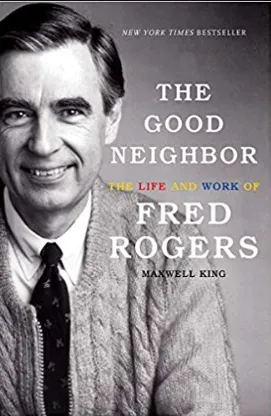
The Good Neighbor: The Life and Work of Fred Rogers
by Maxwell King
Whether it was his colorful cardigans or gentle smile, Mr. Rogers made it a wonderful day in any child’s neighborhood. This full-length biography tells the life story of Fred Rogers, star of “Mister Rogers’ Neighborhood,” through original interviews, oral histories, and archival documents that detail his compassion toward children and devotion to ensuring they had a voice.
The Life and Times of Harvey Milk: The Mayor of Castro Street
by Randy Shilts
The first openly gay elected official in the history of California, Harvey Milk was an enigmatic figure in 1970s politics who championed civil and human rights. Randy Shilts tells his story—leading up to Milk’s assassination in City Hall—with engaging and emotional power while giving the reader a glimpse into the modern-day history of the LGBT movement.

Ruth Bader Ginsburg: A Life
by Jane Sherron De Hart
The life of “the Notorious RBG” is fully captured in this comprehensive biography on the 107th justice of the Supreme Court. Exploring the crucial experiences that shaped Ginsburg’s passion for justice and gender equality—most importantly her faith in the Jewish injunction “Tikkun olam,” or, “repair the world”—Sherron De Hart’s attention to detail and imminently readable prose make this biography a twenty-first-century classic.

Reagan: An American Journey
by Bob Spitz
Five years and hundreds of interviews later, Bob Spitz’s biography of the 40th president of the United States stands as a masterpiece in its category. With rich detail and charm, Reagan’s story comes to life—starting from a poverty-stricken childhood spent in a series of small Midwest towns to his career as a Hollywood actor, governor of California, and ultimately President of the United States.
Harriet Tubman: The Road to Freedom
by Catherine Clinton
Praised for its thorough research and compelling narrative, Clinton’s biography on Harriet Tubman details one of nineteenth-century America’s most influential figures. As the conductor of the Underground Railroad—a network of safe routes and houses that helped slaves escape into free states—Tubman’s story is all at once singular and complex. A must-read.

Steve Jobs: A Biography
by Walter Isaacson
Having penned the story of Benjamin Franklin and Albert Einstein, Isaacson is no stranger to the art of the biography. His New York Times bestseller on Apple co-founder Steve Jobs is a riveting story of the tech giant’s complicated professional and personal life as he sought to connect creativity with technology.
Eleanor Roosevelt: Volumes I, II, and III
by Blanche Weisen Cook
A powerful trilogy celebrated by historians, politicians, and reviewers alike, Cook’s novels stand as the definitive narrative on one of America’s greatest first ladies. Starting from her early childhood and winding its way through the Great Depression and the founding of the United Nations, this trilogy offers a detailed look into who Eleanor Roosevelt was and the legacy she left to the world.
Thurgood Marshall: American Revolutionary
by Juan Williams
Written by Emmy-winning journalist Juan Williams, this biography is a masterclass on writing your biography. It vividly details the life of America’s first African-American Supreme Court justice and chronicles Marshall’s tireless fight for civil liberties while casting light on race relations in the U.S.
The Last Lion: Winston Spencer Churchill
by William Manchester
This gripping tale by William Manchester takes the reader through the first 58 years of Winston Churchill’s life. One of the greatest statesmen of the twentieth century, this well-written book discusses in vivid detail how Churchill built his legacy as an adventurer, aristocrat, and soldier, even during the most troubled of times.
Frida: A Biography of Frida Kahlo
by Hayden Herrera
The complex and fascinating life of Mexican artist Frida Kahlo comes to life at the hands of Hayden Herrera, who masterfully tells the tale of a childhood spent in the Mexican Revolution, a crippling accident at eighteen, and her tempestuous love affairs with the likes of muralist Diego Rivera and Marxist theorist Leon Trotsky.
If you’re wondering whether or not you should consider writing your biography, you’re in good company. But as over 700 Story Terrace customers and their families can attest to, it’s a priceless heirloom that’ll be cherished for generations to come.
Pat Wilson, a Story Terrace client based in Seattle, shared this: “everyone has an interesting story to tell. Their children, their grandchildren would love to hear that story.” No need to wonder how your grandparents first met—that moment will live forever in the pages of a book.
Ready to explore writing your biography? Reaching out to a ghostwriting service can help you kick start the process with a qualified writer who will help manage the entire process for you.
For more details, sign up for our newsletter, or contact us today.

Press Release: StoryTerrace Expands its Board of Directors with Key Hires
StoryTerrace, the autobiography writing service, today announces that former eBay executive Francois Coumau and former Spotify vice president Angela Watts join Rutger Bruining (CEO) and Marek Gumienny on its Board of Directors.
PRESS RELEASE - FOR IMMEDIATE RELEASE
LONDON, 23 January 2019
Story Terrace, the autobiography writing service, today announces that former eBay executive Francois Coumau and former Spotify vice president Angela Watts join Rutger Bruining (CEO) and Marek Gumienny on its Board of Directors. Following strong sales growth for the third year running and a successful crowdfunding campaign in 2018, the start-up aims to expand the reach of its service to the masses.
Story Terrace revolutionizes the way people think about their heritage with a simple idea: a biographer for every person. Customers are carefully matched with and interviewed by one of 500 professional writers in the comfort of their home. The result of the collaboration is a beautifully produced, 100-page hardcover book, including the most meaningful photos of the storyteller’s life. Books are generally shared with family & friends and at times published on Amazon or even in bookstores.
In order to support its growth, Story Terrace has assembled the largest selection of professional biographers in the world. Writers have been published by The New York Times, Penguin Random House, The Financial Times, Bloomsbury, and the Atlantic.
Rutger Bruining, Founder & CEO of Story Terrace, said, “I couldn’t be happier that Francois and Angela are joining our journey. To truly capture the life stories of all of our parents and grandparents, Francois’ experience as General Manager of Continental Europe at eBay and Angela’s experience as VP Global Communications at Spotify from early days through to IPO will be invaluable.”
Francois Coumau commented, “Story Terrace now makes it possible for everyone to capture their own story in a meaningful way, finally creating a solution to the universal desire to leave a personal legacy. I can’t wait to work with Rutger and team to make this inspiring mission a reality.”
Angela Watts added, “Story Terrace’s growth to date is admirable for a company creating a completely new product category – and they’ve only just scratched the surface. I look forward to working with Rutger and his team.”
-- End --
About Story Terrace
Story Terrace’s aim is to create a world where every person captures their story in a meaningful way. To do so, it is looking to turn a million life stories into books using professional ghostwriters by 2028. The company launched in London in June 2015 and opened an office in Los Angeles in July 2017. It has a network of 500 biographers globally, including a five-time Emmy award winner and multiple New York Times bestselling authors. Story Terrace’s largest markets are the United States, the United Kingdom, and the Netherlands.
For more information, please visit: www.storyterrace.com/press
Story Terrace
Jeltsje Boersma - Press Officer
T: (+49)(0)162 85 92 669

One Million Stories
When my grandfather passed away, I realised that I had missed the chance to make a record of his life. It made me wonder - “Why don’t we capture the stories of the people we care about the most?” It’s this inspiration that made me give up my day job a few years ago and start StoryTerrace.
How my grandfather inspired me to start StoryTerrace
I loved my grandfather’s stories. The room filled with cigar smoke, I would listen to tale after tale as we played backgammon together. I loved to hear about his adventures with his football team, or the time he met my grandmother.
As a member of the Dutch resistance during World War II, he certainly had some tales to share. Tales full of laughter, wisdom, and life lessons that shaped who I became as I grew up.

Today over 500 writers work with Story Terrace worldwide
Sadly, when my grandfather passed away, I realized that the details of those old stories had faded. I had missed the chance to make a record of his life–to write down those stories as only he could tell them.
There were so many questions I wished I had asked. So much I could have learned about how he faced the challenges I was approaching as an adult. And I wished I could show him how important those boyhood stories truly were to me.
It made me wonder - “Why don’t we capture the stories of the people we care about the most?”
Today, this is a common problem. We have Facebook pages, and old home movies and photo albums. But these are often left scattered in boxes, on old computers and discarded and broken phones - and they often don’t tell the important stories.
"We want to create a world where everyone has the opportunity to capture their story in a meaningful way."
It’s this inspiration that made me give up my day job a few years ago and start StoryTerrace.
At this very moment, we are working with hundreds of people to capture the stories that matter to them, using our global network of over 500 ghostwriters.
Entrepreneurs, refugees, beloved parents and grandparents. Doctors, teachers, volunteers, and survivors. Family business owners. People like you and me, capturing their unique heritage and creating a legacy for future generations.
After helping so many people bring their stories to life, we know that everyone has a story to tell.
That's why we are a company with big ambitions. We are aiming to turn 1 million real-life stories into books in the next decade - because we want to create a world where everyone has the opportunity to capture their story in a meaningful way.
So, welcome to the StoryTerrace family. Whether you want to record your own story, or capture the memories of a loved one, I can’t wait to see what we create together.
I am Rutger Bruining, Founder and CEO of StoryTerrace, and I hope that together we can change the way that history is written.
Now Is The Time To Share Your Story
StoryTerrace is your book production partner, including all ancillary activities from high-quality professional writing and editing to design, printing and publishing.


